
Pilot Launch | The Future of Digital Aid: Integrating Privacy and Stablecoins for Displaced Communities in Colombia
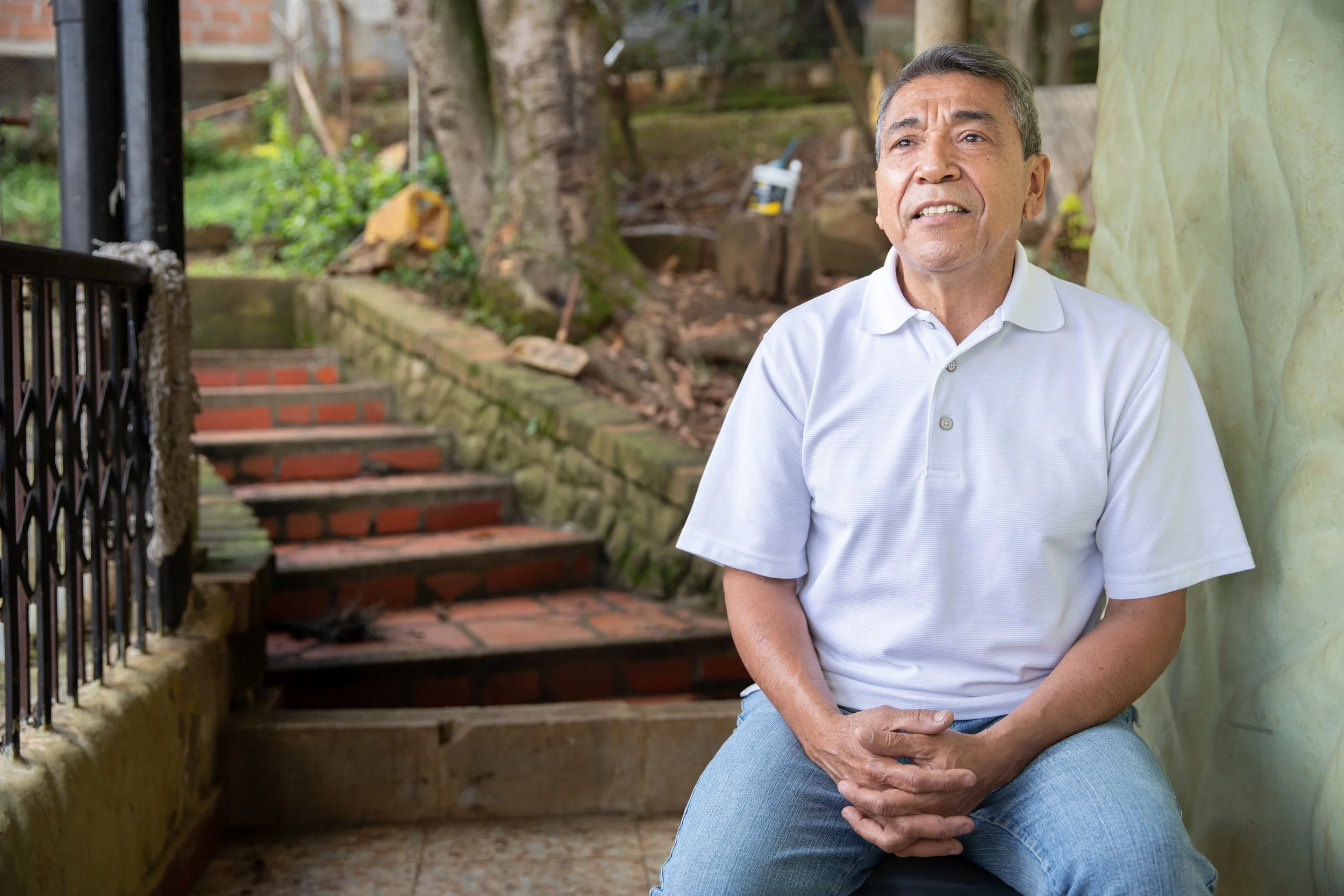
Felix Arroyo, a refugee from Maracaibo, Venezuela, worked as an architect for 25 years and now lives in Colombia. Photo credit: Ezra Millstein / Mercy Corps
Mercy Corps Ventures, in partnership with Aleo, Humanity Link and the Danish Refugee Council, is proud to announce a first-of-its-kind blockchain initiative—deploying privacy-preserving stablecoin payments to protect the privacy, safety, and dignity of displaced people and migrants receiving humanitarian cash assistance in Colombia.
Blockchain innovation in humanitarian assistance has come a long way. Earlier pilots validated the cost and speed advantages of stablecoin-based cash transfers, improved personal safety, transaction security and delivered real-time visibility for donors and implementers. More recently, smart contracts and AI have enabled us to automate anticipatory action workflows. This pilot takes the next step: addressing data privacy and protection—a challenge faced by both aid organizations and the people they serve.
By combining stablecoins with zero-knowledge proofs (ZKPs)—a cryptographic protocol that validates unique payment identifiers without exposing personal data—this pilot tackles two persistent problems simultaneously: deduplication in cash assistance and the protection of beneficiary privacy and dignity. For populations who risk their safety by disclosing personal information, the stakes could not be higher.
This post is the first in a two-part series. The second will share key insights and results once the pilot is complete.
In Brief
The pilot will deploy a privacy-preserving stablecoin payment system that uses zero-knowledge proofs (ZKPs) to verify beneficiary eligibility without exposing personal data—enabling displaced people and migrants to receive humanitarian cash safely and with dignity.
Target beneficiaries are Venezuelan refugees and migrants, Colombian returnees, and climate-displaced host community members in rural and border regions of Norte de Santander and Santander, Colombia, supported through the Danish Refugee Council’s programming.
A key innovation is dual individual and group (VSLA) stablecoin wallets, accessible via WhatsApp —allowing even participants without smartphones to receive and manage digital funds.
In Colombia alone, the Danish Refugee Council supports more than 200,000 people. If successful, this model could scale to millions of climate- and conflict-affected people across the region and in other contexts where vulnerable groups face human and data protection risks.
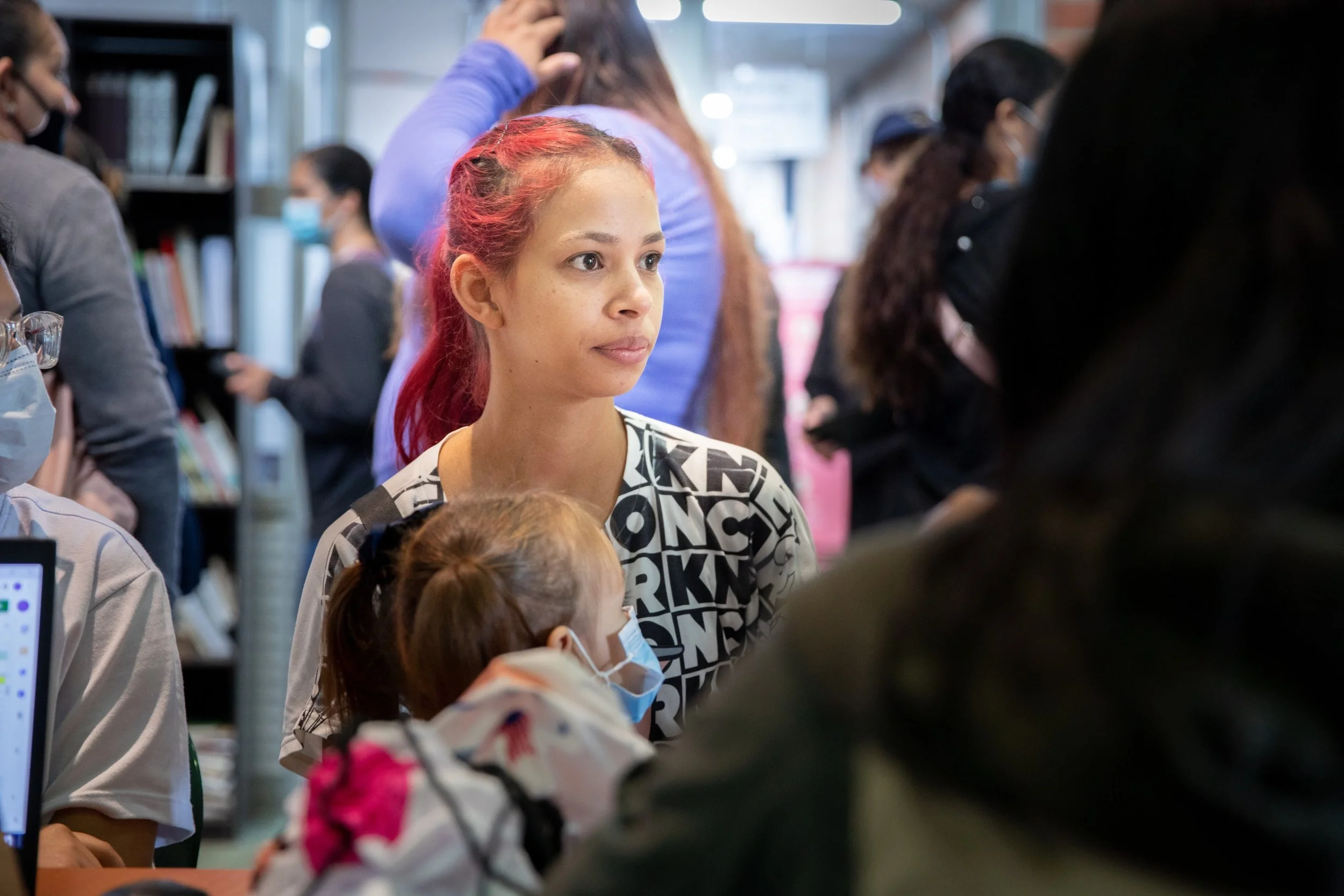
Dinoska came to Colombia with her husband and daughter. The transition has been challenging, as most of her family remains in Venezuela and her support system is limited. Photo credit: Ezra Millstein / Mercy Corps
The Problem
Displaced people in Colombia face intersecting crises
Colombia hosts one of the largest forced displacement crises in Latin America. As of mid-2024, the country is home to approximately 2.8 million Venezuelan refugees and migrants, while nearly 7 million Colombians remain internally displaced by decades of armed conflict. In border regions like Norte de Santander, displaced families navigate a landscape shaped by armed groups, extortion networks, and deep institutional gaps. Many crossed into Colombia through informal border crossings controlled by criminal organizations, often forced to pay extortion fees along the way.
Migrants and refugees—particularly Venezuelans—face significant barriers to humanitarian registration due to fear of detention, deportation, or mistrust of authorities, despite government efforts like the Temporary Protective Permit (PPT). As of early 2026, over 3 million migrants reside in Colombia, yet security concerns, legal status uncertainty, and administrative hurdles prevent many from registering—forcing them to remain invisible to aid systems. Protection is therefore a primary concern and a core area of focus for the Danish Refugee Council, the lead field partner on this pilot.
Four intersecting challenges define the problem this pilot seeks to address:
Physical insecurity from cash distribution: In regions controlled by armed groups, carrying cash makes displaced people targets for theft, extortion, and violence. Traditional cash-in-envelope distributions require recipients to travel to pick-up points and return home with physical money—exposing them to serious risk along the way.
Privacy and protection risks from centralized data systems: Humanitarian organizations routinely collect extensive personal data—names, biometrics, locations, family details—often stored in centralized databases with inadequate safeguards. For migrants who fear identification or deportation, or who have fled persecution, this data exposure can be an existential risk. In Colombia, where armed groups actively seek information about community members, the consequences of a data breach are severe. Many displaced people avoid registering for aid altogether rather than risk exposure.
Digital exclusion of the most vulnerable: While digital payments promise safety improvements over physical cash, they typically require smartphones and digital literacy that the most marginalized populations lack. Feature phone users, elderly participants, and those with limited literacy are routinely excluded from digital humanitarian programs—the very people who most need protection.
Aid systems were not built for this: Many steps in humanitarian cash delivery in Colombia rely on manual, paper-based processes. Beneficiaries register and provide detailed personal information. On a separate day, they return to be re-verified manually before receiving funds. When families need to relocate, the entire process starts over. This is slow, resource-intensive, and requires repeated disclosure of sensitive information—while leaving organizations without real-time visibility into whether assistance is reaching the right people without duplication. Industry estimates suggest that up to 10% of global humanitarian cash transfers may be duplicated. Deduplication systems in Ukraine, for example, saved $230 million over three years by preventing duplicative cash assistance. The cost of getting this wrong—in dollars, in dignity, and in lives—is significant.
Currently, there is no single end-to-end solution that effectively combines the efficiency of stablecoin disbursement, meets the necessary privacy and security needs for all parties, and is accessible in low-tech environments. This pilot is designed to fill that gap.
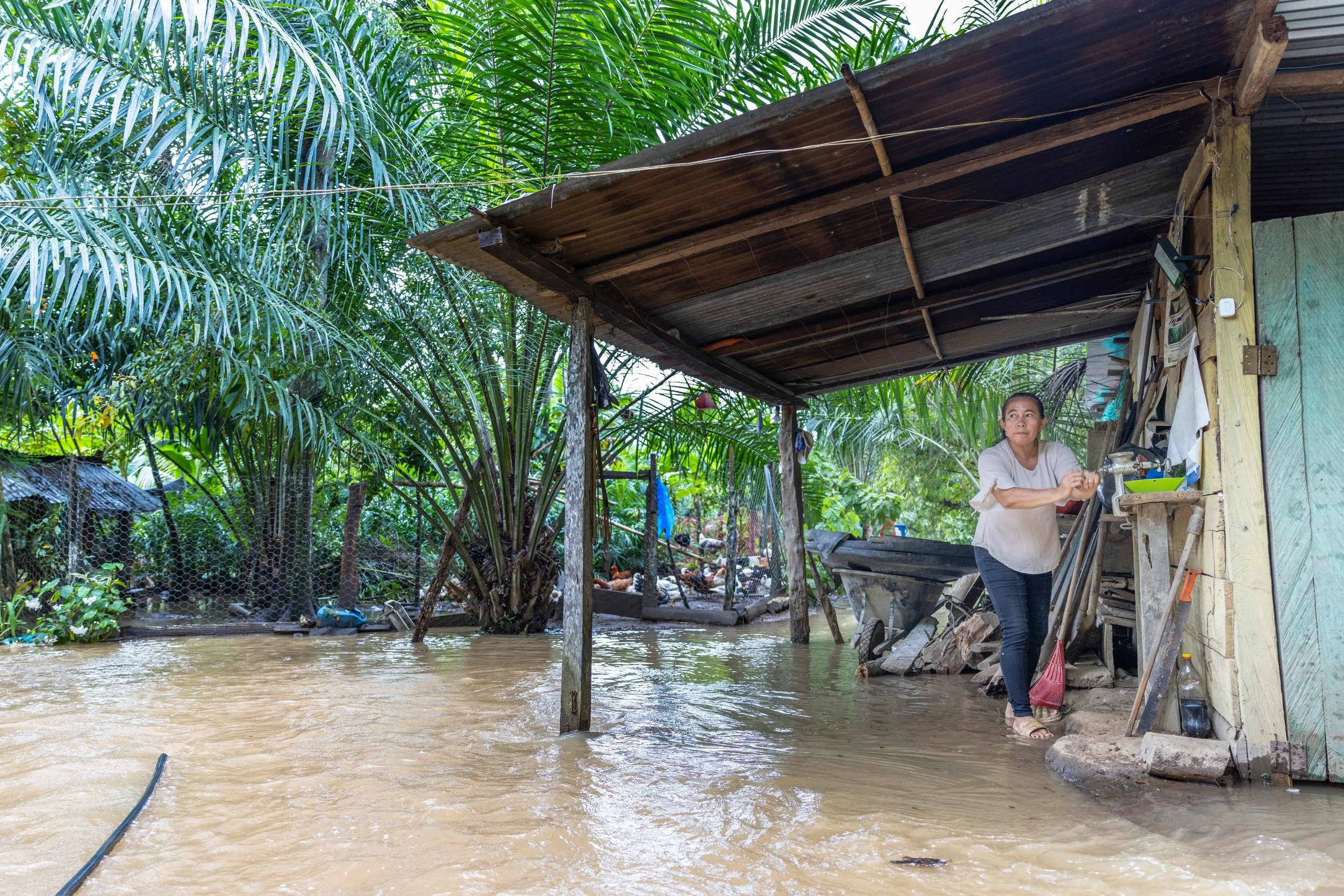
November 2024, Campo Dos, Colombia. Yaneth*, 47, grinds cacao beans at home while a nearby river floods the area. *Name has been changed. Photo credit: Ezra Millstein / Mercy Corps
The Pilot
Mercy Corps Ventures is partnering with Humanity Link, the Danish Refugee Council, and Aleo Foundation to bridge the gap between privacy-preserving technology and humanitarian cash delivery. By leveraging privacy preserving stablecoins, zero-knowledge proofs and an accessible, low-tech design, this pilot will distribute aid with the physical security of digital currency and the privacy of cash, all while protecting the confidentiality of participants.
The pilot will onboard approximately 100 households, i.e. 300 migrants, returnees, and host community members to privacy-preserving stablecoin wallets, disbursing approximately $15,000 in stablecoin-based humanitarian cash transfers across a six-month period from April to September 2026.
What makes this pilot innovative
The platform integrates multiple technologies to create a seamless, privacy-preserving humanitarian cash delivery system:
1. Zero-knowledge proof verification
Aleo’s zero-knowledge proof technology enables cryptographic verification of beneficiary eligibility without exposing personal data. Aid organizations can confirm that a person qualifies for assistance without seeing or storing their identity documents, biometric data, or location.
This eliminates the need for repeated re-registration and manual field verification exercises—a process that currently requires 100% manual checks and exposes sensitive data at every step.
Humanity Link’s humanitarian-adapted platform links registration directly to payment disbursement, creatingan interoperable digital identity and payment system that delivers verifiable, individual-level accountability.
2. Private stablecoin disbursement to group wallets
Humanitarian cash is disbursed as stablecoins (USDCx) on the Aleo blockchain—a privacy-preserving chain that ensures secure, traceable transactions without publicly exposing beneficiary data. "This will be the first time that the privacy-preserving USDCx is used in a humanitarian setting"
Funds flow to both individual and group stablecoin wallets, supporting collective savings and lending activities of village savings and loan associations (VSLAs). This structure leverages the trust and social infrastructure that savings groups already provide in displaced communities.
Colombia’s high smartphone and stablecoin adoption rates provide a favorable environment for this approach, with established off-ramp infrastructure for converting digital funds to local currency.
3. Accessible, low-tech design
A WhatsApp-based interface allows group members to interact with the system in Spanish using a familiar platform—removing the barrier of learning new applications.
NFC-enabled smart stickers offer a secure, low-tech alternative for participants without smartphones:a simple tap of a sticker against a facilitator’s device completes a transaction.
A dedicated interface enables DRC staff to onboard participants, provide support, and resolve disputes—maintaining the human element that is essential in communities where trust must be earned.
Who Will Benefit
The pilot will directly support:
300 migrants, returnees, and host community members participating in DRC programming in Norte Santander and Santander, in border regions near Venezuela where numbers of migrating and displaced people are high.
Danish Refugee Council staff and facilitatorswho will gain access to a more efficient, privacy-preserving platform for managing beneficiary data and cash distributions—reducing the operational burden of manual verification while improving accountability.
The broader humanitarian ecosystemin Colombia, where organizations like NRC, UNHCR, and IOM serve millions of displaced people and have expressed interest in privacy-preserving digital delivery solutions that could integrate with their existing operations.
Beyond immediate beneficiaries, the pilot will generate evidence on how zero-knowledge proof technology can be practically applied in humanitarian settings, creating a replicable model for privacy-preserving aid delivery that protects the dignity and safety of displaced populations.
Learning Agenda
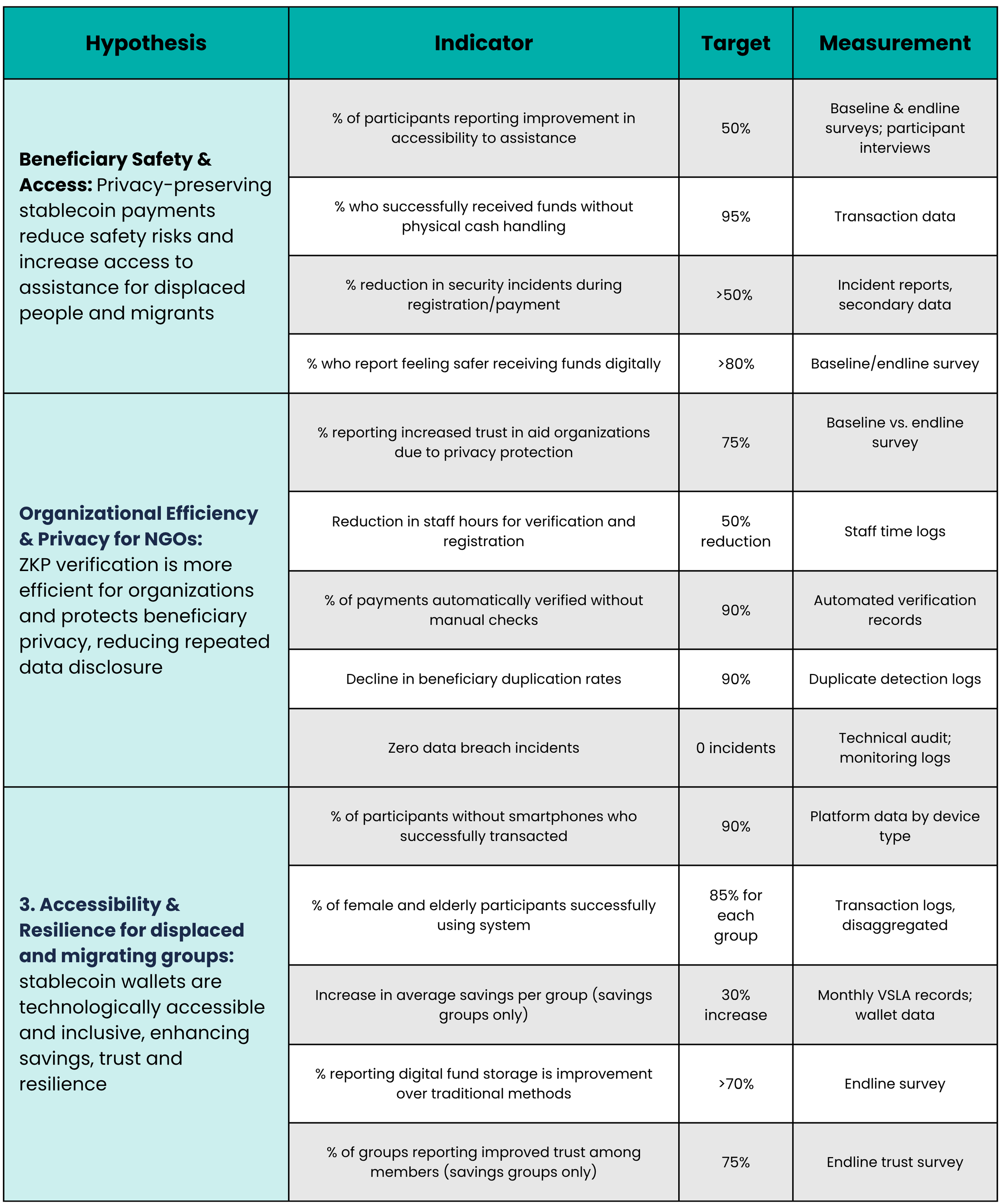
We will test three core hypotheses during this pilot across multiple indicators. This learning agenda is designed to generate evidence not just on whether the technology works, but on whether it meaningfully improves safety, privacy, and access for target groups:
The Consortium
This pilot brings together organizations with complementary expertise across humanitarian operations, privacy-preserving technology, and community development:
Humanity Link’s communication journey designs have reached over 5 million people and delivered $70 million in aid across 30 countries. Founded in 2020, their communication and data management platform powers self-registration, verification, and disbursement in humanitarian contexts worldwide, with deep expertise in adapting digital solutions for low-resource, high-risk environments.
The Danish Refugee Council has operated in Colombia since 2011. With over 450 staff across 13 offices—spanning Norte de Santander, Nariño, La Guajira, Atlántico, and Bogotá—DRC delivers multipurpose cash assistance, legal counselling, gender-based violence prevention, and emergency response to refugees, migrants, internally displaced persons, and host communities. As co-lead of Colombia’s Protection Cluster, DRC brings extensive operational experience managing large-scale cash transfer programs for displaced populations.
Aleo is a leading zero-knowledge proof blockchain, providing the cryptographic infrastructure that makes programmable privacy possible. Aleo’s technology enables verification of beneficiary credentials without revealing underlying personal data—a fundamental advance over current approaches to data protection in humanitarian settings.
Mercy Corps Ventures provides funding, strategic guidance, and impact measurement in partnership with Crypto Council for Innovation. MCV’s portfolio of pilots across emerging markets—including Syria, Afghanistan, Nepal, Senegal and Haiti—ensures that lessons from this project inform the broader ecosystem of humanitarian innovation.
The GSR Foundation acted as a catalytic funder across the ecosystem, supporting both Mercy Corps Ventures and Humanity Link in advancing privacy-preserving financial infrastructure for vulnerable populations
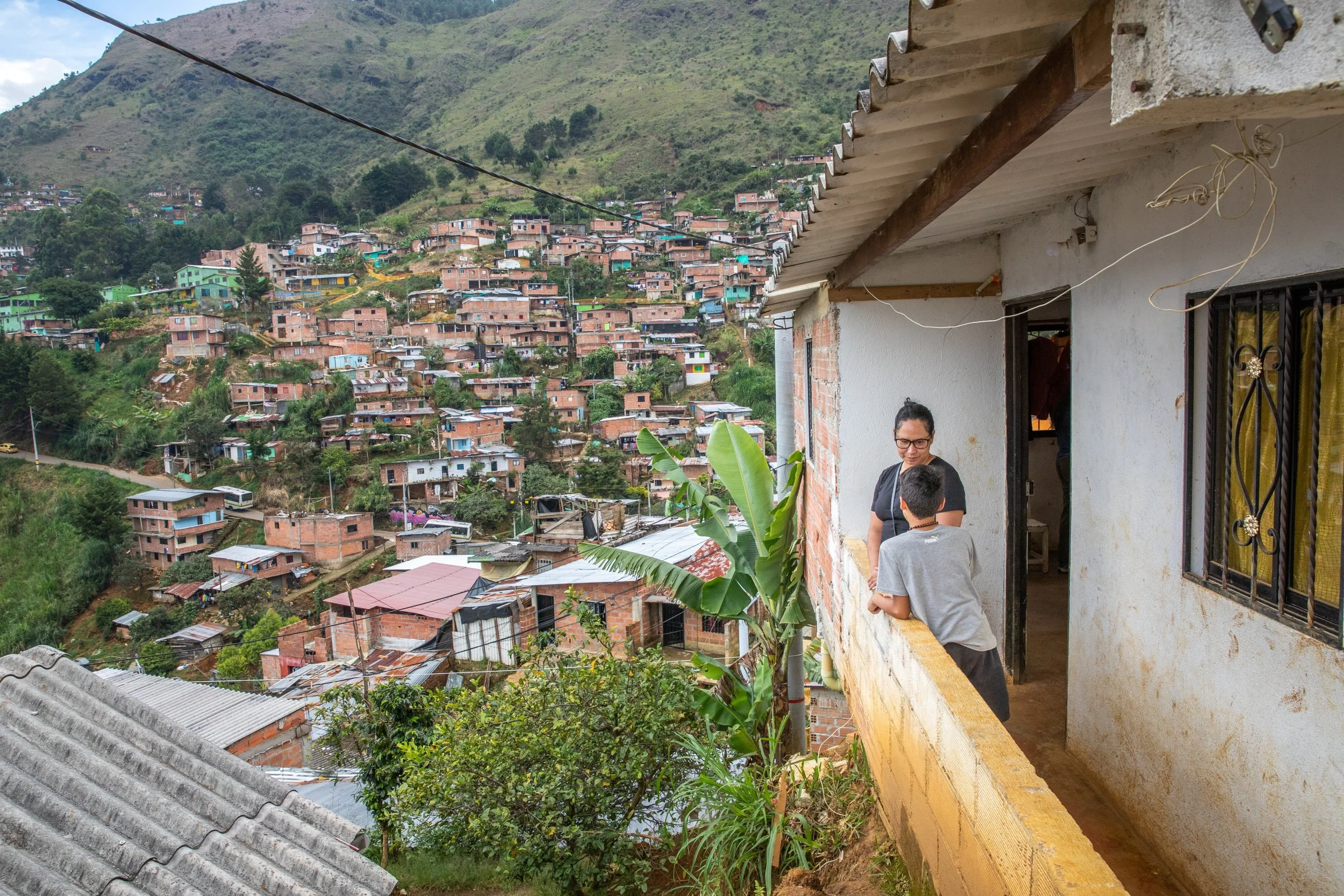
Tomasa arrived in Colombia four years ago and now lives in a hillside neighborhood on the outskirts of Medellín, where homes are increasingly vulnerable to heavy rains and mudslides as climate change drives more unstable weather. Photo credit: Ezra Millstein / Mercy Corps
Looking ahead
Humanitarian aid often requires displaced and migrating people to re-register multiple times and disclose sensitive information repeatedly. At the same time, digital cash delivery lacks privacy protections and transparency. This pilot merges the two systems—registration and payout—into a single privacy-proof model that confirms eligibility without revealing personal data, and delivers funds through mechanisms designed for the most excluded, ensuring collective trust and resilience.
If successful, this approach can scale to millions of climate- and conflict-affected people across the region and beyond. We look forward to sharing what we learn. Stay tuned for Part 2, where we will present the pilot’s results, insights, and implications for the future of privacy-preserving humanitarian finance.