
Pilot Insights | Building Water Resilience: How Automated Ice Reservoirs Are Buying Time for Mountain Communities
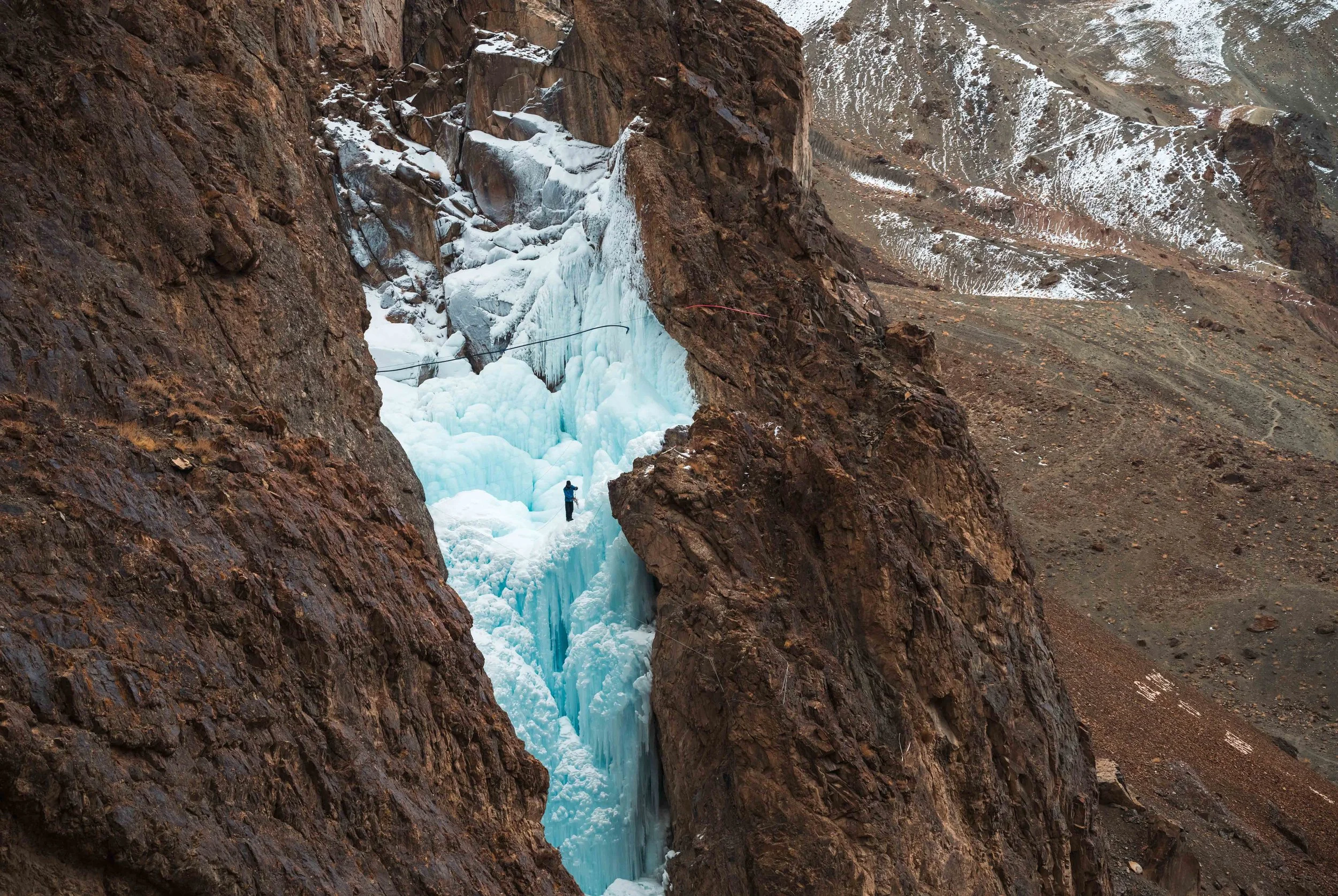
AIR in Ursi
By Maria Paula Gomez, Mercy Corps Ventures, with Suryanarayanan Balasubramanian and Basit Afzal, Acres of Ice | May 2026
This is the second post in a two-part series. Read part 1 here.
In November 2024, we launched a pilot with a simple but urgent question: could a team of engineers make an ancient water storage technique reliable enough to save Himalayan villages from disappearing?
In Ursi, a village of just 16 households tucked between the Zanskar and Indus rivers, that question is crucial. Without reliable water for spring sowing, there is no harvest. And without harvest, there is no reason to stay. For years, getting through the spring sowing season meant taking turns staying awake through freezing nights, monitoring water flow from hand-built ice reservoirs, never quite sure if there would be enough water when it mattered most.
This post shares what we found after one full winter season of Automated Ice Reservoirs (AIRs) operating across seven villages in Ladakh.
The problem we set out to solve
Ladakh receives less than 100mm of rainfall annually, and 90% of its villages depend on glacial meltwater for both drinking and irrigation. Spring sowing has always depended on winter precipitation, snowfall and snowmelt arriving just in time for farmers to prepare their fields in the spring. But that supply has become increasingly unpredictable as snowfall declines and patterns shift. Glacial meltwater, which historically supplemented water supply later in the season around June, retreats further up in the mountains each year and arrives even later. Meanwhile, in winter, when temperatures drop to –200C, glacial streams flow unused into the ocean. The water exists. It’s just in the wrong place at the wrong time.
Communities across Ladakh have long known the solution: ice reservoirs, or ice stupas. These are structures built by channeling that winter water through a fountain nozzle, freezing it into a large mound that melts slowly through spring. The idea works. But in practice, more than 20% of Ladakh’s villages have attempted to build ice reservoirs, and two-thirds of those villages eventually abandoned the practice, defeated by frozen pipelines, inefficient fountains, and the relentless labor of round-the-clock maintenance. Of 220 villages in Ladakh, only 14 are active users today.
This is the gap Acres of Ice was built to close.
For the full background on the problem and the history of ice reservoirs, read Part 1 of this series.
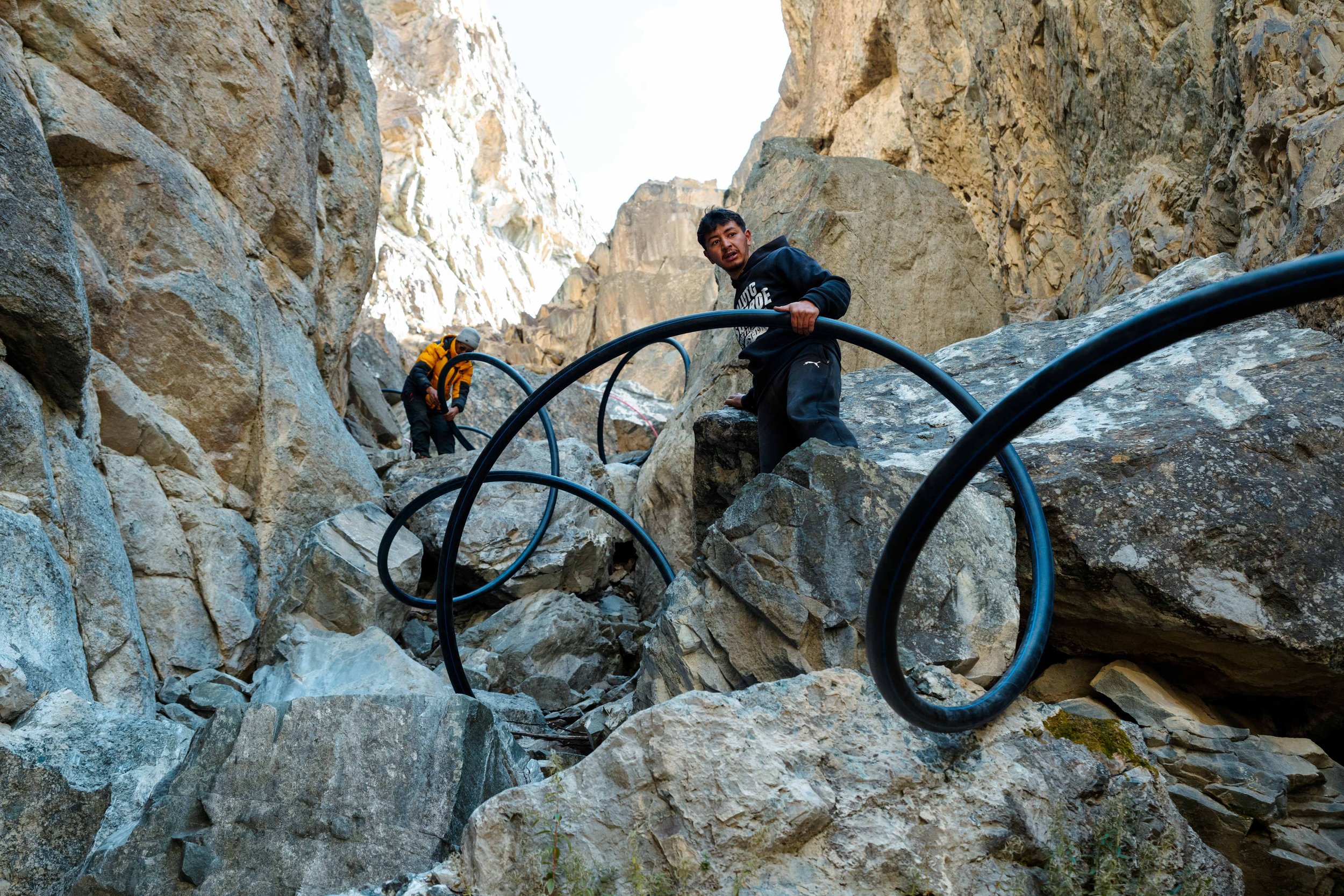
Ursi Fieldwork
The innovators: Technology rooted in local knowledge
Dr. Suryanarayanan Balasubramanian (Surya) holds a PhD in glaciology from the University of Fribourg and spent years studying ice stupas before co-founding Acres of Ice. His co-founder, Basit Afzal, spent nearly a decade working on irrigation systems across the region, including early work on the original ice stupa project under Magsaysay Award-winner Sonam Wangchuk. They both grew up understanding the problem and the communities it affects.
Their innovation builds directly on what those communities already know how to do, and makes it work at scale through three additions:
Custom 3D printed fountain nozzles, engineered to produce the precise water droplet size and trajectory that maximizes ice formation.
An automated sensor system that continuously monitors weather and pipeline conditions, switching the system between spray and drain modes to maximize ice formation while preventing the pipeline freezing events that have historically caused these systems to fail.
A remote monitoring dashboard that lets operators oversee multiple sites simultaneously. This is critical for running seven villages across a vast and often inaccessible mountain landscape.
Together, Surya and Basit are building Automated Ice Reservoirs (AIRs) based on a centuries old indigenous solution and making it reliable enough to last.
Why we backed this pilot
At Mercy Corps Ventures’ Climate Venture Lab, we look for innovations that have the potential to make a real difference for vulnerable communities and then help them prove it. When we first met Acres of Ice, we saw exactly that: a technically credible team, deeply rooted in the communities they serve, with a solution that addressed a real and growing problem. What was missing was the evidence needed to take it further.
We funded this pilot not just to evaluate whether it worked, but to help generate the proof that could unlock the next stage: more villages, more funding, broader reach. To do that rigorously, we structured the pilot around three core questions:
Would AIRs solve the seasonal timing problem – delivering water when farmers need it, during the spring sowing season?
Would automation reduce the maintenance burden enough that villages wouldn't abandon the practice after the first season?
Was this commercially viable? Could it be built and operated at a cost that made sense compared to alternative water storage solutions?
Acres of Ice deployed AIRs across seven villages between November 2024 and March 2025, targeting 800 smallholder farmers as beneficiaries. Results were measured through monthly drone surveys tracking ice volume, continuous sensor data from the automation system, and detailed household surveys with farmers in Ursi and Igoo villages. Here is what we found.
What we found
What worked
The timing problem is largely solved. In Ursi, a remote village of just 16 households that had been building ice reservoirs manually for seven consecutive years, 92% of households reported improved water availability and increased crop yields after the first season with the automated system. Nearly a third of families expanded their cultivated land, motivated by the new reliability of having water during early growing stages. In Ayee, 76% of villagers observed meaningful improvements in spring water access, enabling timely sowing for the first time in recent memory.
The maintenance burden has been dramatically reduced. 75% of Ursi villagers reported that AIR significantly simplified the overall maintenance process compared to traditional ice stupas. The change that resonated the most wasn’t technical; it was human. Traditional ice reservoirs require someone to be awake through the night, monitoring water flow and freezing conditions. That duty typically fell to younger family members. With the automated system, those nighttime shifts are gone. Families reported being able to focus on farming, household duties, and other livelihood activities in ways they hadn’t been able to before. Across most sites, the system maintained over 90% active spray time during the November-March window, surviving temperatures as low as –220C.
The economics are compelling. Across seven sites, the pilot stored 18.4M liters of ice at a three-year cost of ₹0.18 per liter (~$0.002 USD), approximately 80 times cheaper than conventional cement water tanks, and significantly lower than plastic-lined ponds or steel tanks as well. For governments and NGOs evaluating water storage infrastructure, this cost comparison is striking.
What’s nuanced
Not every village experienced the same benefits, and that’s an important finding. In small, tight knit Ursi, where all 16 households are closely connected to the water source, the benefits were felt nearly universally. In larger Igoo, with over 260 households spread across a long valley, geography determined outcomes. Upstream residents – closer to the AIR installation – reported clear improvements in water availability. Downstream residents often observed little to no change. This points to a design lesson that goes beyond the technology: placement and downstream distribution infrastructure matter as much as the ice reservoir itself. Future implementations in larger villages will account for this.
What remains
There is one challenge the team has not yet fully solved: water-use efficiency. Across all seven sites, the proportion of sprayed water that froze into usable storage remained below 20%. In practical terms, this means a significant share of winter water is not frozen but rather returning to the stream. Acres of Ice has a clear roadmap to address this, targeting doubling efficiency through improved fountain design and pipeline configurations next season. And critically, the pilot generated exactly the data needed to drive that optimization. That is what a good pilot should do: not just confirm what works but sharpen the focus on what to fix next.
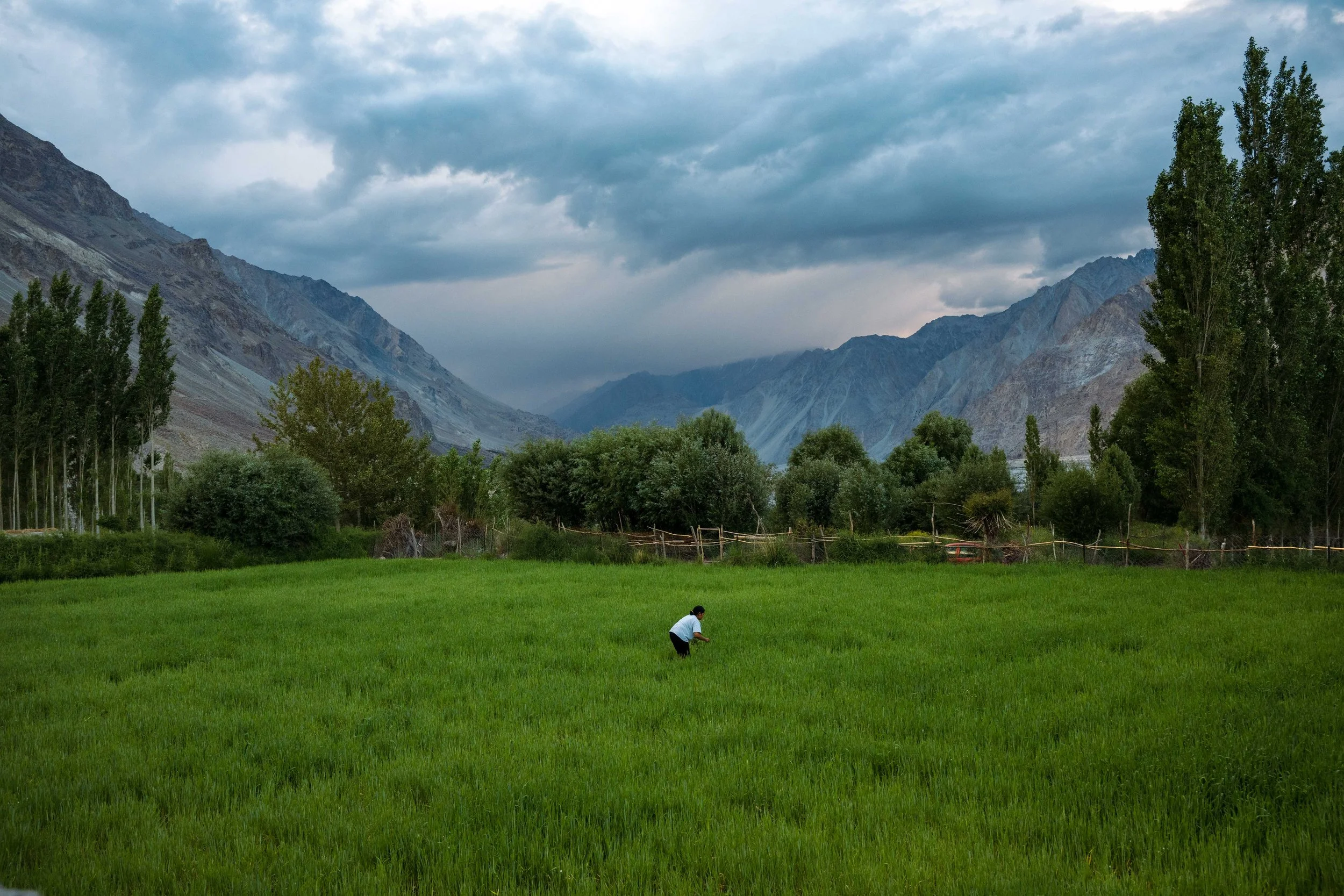
Ayee Village
Why this model of innovation matters
At Mercy Corps Ventures, we back innovations that are technically credible, locally embedded, and designed to reach people that mainstream climate finance often overlooks. Acres of Ice is a strong example of what that looks like in practice: founders who know the terrain, building on ancestral knowledge, using modern technology to make a proven concept finally work at scale.
What this pilot also demonstrates is the value of rigorous, hypothesis-driven investment. We came in with three specific questions. We invested in the measurement infrastructure – drone surveys, household surveys, continuous sensor monitoring – to answer them. We leave with findings that are honest about both what worked and what still needs work. This kind of learning is what allows innovations like this to improve quickly and scale responsibly.
For Acres of Ice, the road ahead is ambitious. Having proven the model across seven villages in Ladakh, the team is targeting 20 AIRs installations next winter, with plans to expand to new regions including across India, Nepal, and Peru. They were recently selected as one of six winners from over 1,200 applicants in Klarna and Milkywire’s AI for Climate Resilience program. The global potential is significant: across the Hindu Kush Himalayas and the Andes, over 14,000 glacial-fed villages support nearly 14 million people facing the same water challenges.
Buying time
The glaciers are still retreating. Automated ice reservoirs will not stop that. Surya is honest about this. The goal is not to replace what nature built over millennia, but to extend the window during which communities can adapt, plan, and survive.
What this pilot showed is that the window can be extended – reliably, affordably, and in a way that communities actually want to own and operate. For farmers in Ursi, who can now plan their sowing schedule with confidence, or families in Ayee who no longer lose sleep monitoring a water pipe through the night, that window is already making a difference.

Are you working on climate adaptation innovation in mountain regions or other vulnerable ecosystems? We’d love to hear from you. Learn more about the MCV Climate Venture Lab or get in touch.