
Pilot Launch | Tackling water scarcity through seed enhanced tomato seeds in Mexico
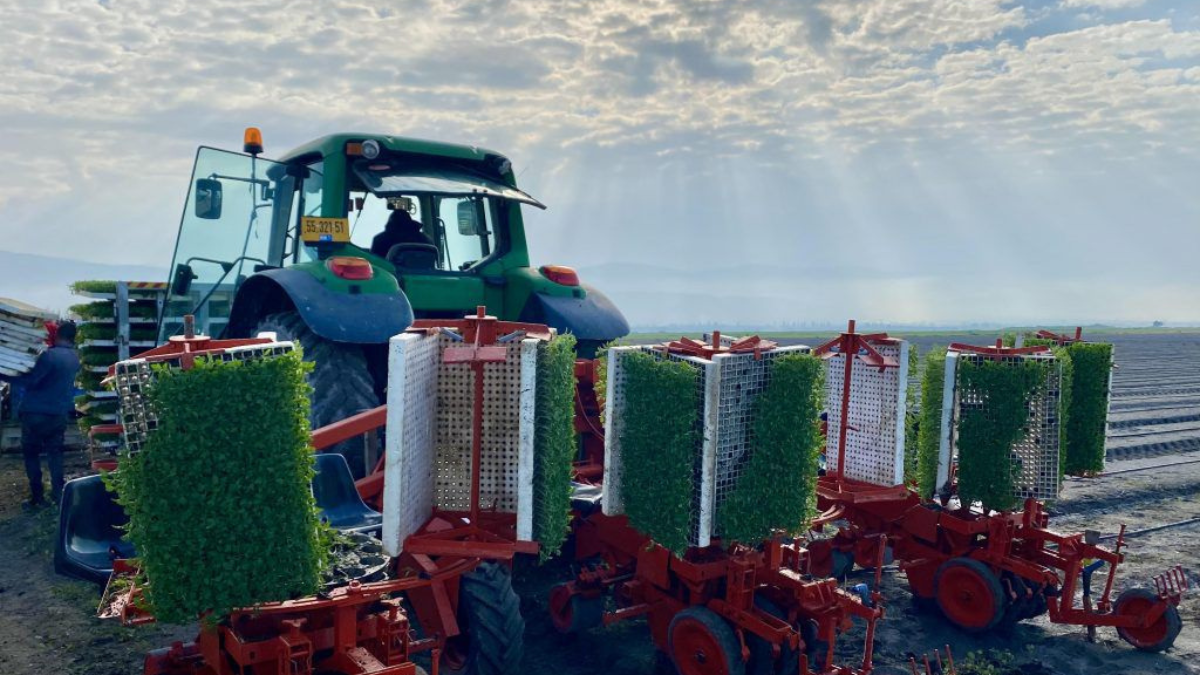
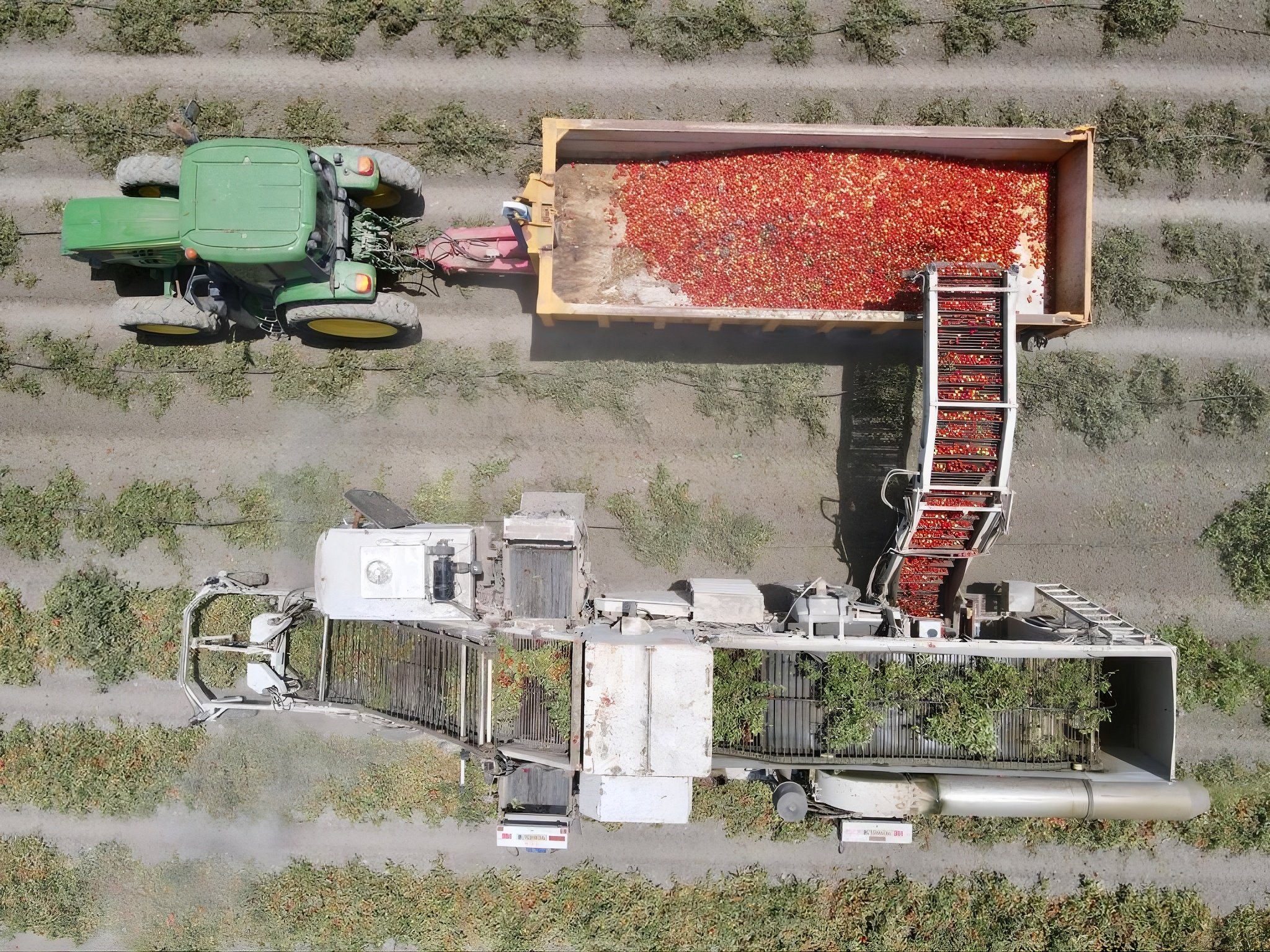
Tomato crops
Mercy Corps Ventures has launched a pilot with Salicrop using a non-GMO seed ‘priming’ process designed to enhance plants’ resilience to heat and saline irrigation. The pilot is one of three selected from our recent Innovative Tech for Water Security call for proposals, which received 243 applications from 48 countries.
This post will be followed by other posts highlighting key insights after the pilot is completed. Written by Maria Gomez, Climate Venture Lab Lead at Mercy Corps Ventures and Carmit Oron, CEO, Salicrop.
In brief:
Why this is needed: Tomato farmers in Baja California face worsening droughts, rising temperatures, and saline irrigation, conditions that can cut yields by 20-50% and threaten livelihoods. These climate stresses lead to stunted plants, lower productivity, and shrinking incomes.
What we’re testing: Mercy Corps Ventures is partnering with Salicrop to pilot a non-GMO seed priming technology that enhances resilience to salinity and heat. The treatment is applied before sowing, improving germination, vigor, and stress tolerance without requiring new equipment or changing trusted varieties.
Why it matters: This seed-level solution offers a low-touch, scalable approach to climate adaptation, helping farmers grow with less under harsh conditions while maintaining compatibility with local varieties and practices.
What success looks like: Improved germination and plant vigor, higher yields and fruit quality under saline and heat stress, and actionable insights for integrating seed enhancement into local value chains and financing models.
The Problem
In northern and central Mexico, smallholder farmers are already living with the realities of climate change. Water is becoming scarcer, temperatures are rising, and soil is turning saltier. For tomato growers in Baja California, these trends are not abstract projections—they show up as stunted plants, lower yields, and shrinking incomes.
In coastal areas of Baja California, seawater intrusion and prolonged drought have degraded groundwater quality. Many farmers now rely on brackish water for irrigation, which can cause yield losses of 20–50% in sensitive crops like tomatoes. When harvests fail, families are forced to cut back on food, delay investments, or take on debt just to keep farming another season.
To help farmers adapt and thrive under these harsh conditions, Mercy Corps Ventures is partnering with Salicrop, an ag-tech company that develops seed enhancement for improving resistance to abiotic stresses such as salinity and heat. Together, we are launching a pilot in Baja California to test a practical, seed-based solution that can help farmers “grow more and lose less” in a changing climate.
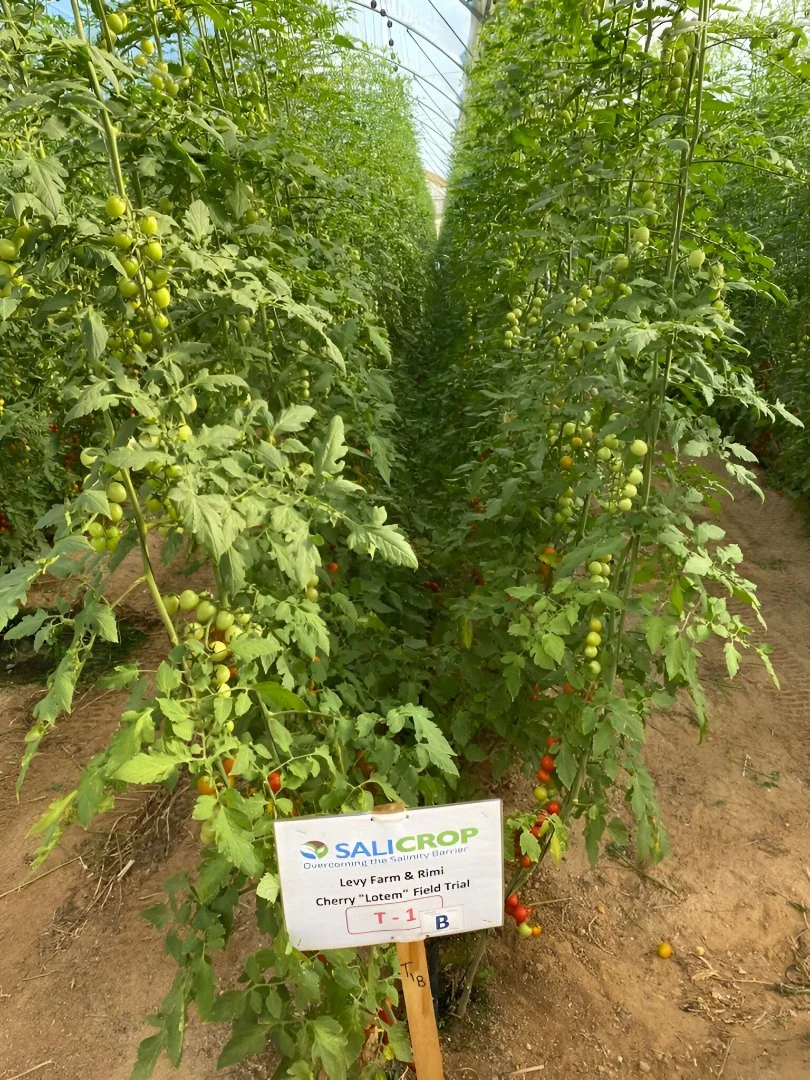
Tomato fields
The Pilot
A Seed-Level Solution for Climate Stress
Salicrop’s technology focuses on what farmers know best: their seeds.
Instead of asking farmers to switch to unfamiliar varieties or purchase new equipment, Salicrop works with the same tomato varieties farmers already trust, applying a one-time treatment before sowing. This non-GMO “priming” process is designed to improve seed performance under stress—helping plants cope better with saline water and high temperatures and supporting more uniform emergence and vigor in the field.
For smallholder farmers, this approach offers several key advantages:
No new hardware or complex practices – the treatment happens before seeds reach the farm.
Compatible with existing varieties – farmers can keep using genetics that are already adapted to their markets and preferences.
Low-touch, highly-scalable – a single pre-sowing treatment can support the entire season.
Salicrop team
What the Baja California Pilot Will Do
Over the 2026 season, the Salicrop–Mercy Corps Ventures pilot will work with 10 smallholder tomato farmers in Baja California to test how enhanced seeds perform under real-world conditions of salinity and heat.
The pilot will:
Recruit local partners and farmers
Engage local agronomist and implementation partners to support farmer outreach and technical guidance.
Identify tomato growers who are already struggling with brackish irrigation water and climate-related yield losses.
Treat and distribute tomato seed
Tomato seeds will be enhanced by Salicrop prior to delivery.
Farmers will sow enhanced seeds alongside their usual (untreated) seeds to create side-by-side comparisons in their own fields.
Provide training and hands-on support
Farmers will participate in workshops and field days on best practices under salinity and heat stress.
A local agronomist and an Israeli project lead will conduct field visits to support monitoring and troubleshooting during the season.
Measure agronomic and sustainability outcomes
Field teams will track indicators such as germination, plant vigor, yield, and fruit quality on treated vs. untreated plots.
The project will incorporate remote sensing analytics and a sustainability KPI report at harvest, looking at water use, plant health, and other climate resilience metrics.
Beyond agronomic performance, the pilot will also explore how to integrate this seed-level solution into local value chains—working with farmer organizations, agribusinesses, and financial institutions such as FIRA, a key agricultural development bank in Mexico.
Centering Farmer Voices and Learning
At Mercy Corps, we know that climate innovation only matters if it works for the people most affected by climate shocks. That’s why this pilot is built as much around learning with farmers as it is around testing technology.
Throughout the project, participating farmers will be invited to share:
Their experiences with salinity, water scarcity, and extreme heat.
How treated seeds perform compared to their usual seeds in terms of yield, quality, and risk.
What type of support—inputs, finance, or market access—they need to continue adopting climate-smart practices.
These insights will feed into a shared learning agenda and theory of change for the pilot, helping Mercy Corps Ventures and Salicrop refine the model, prioritize farmer needs, and design future collaborations that are inclusive, practical, and scalable.
Learning agenda
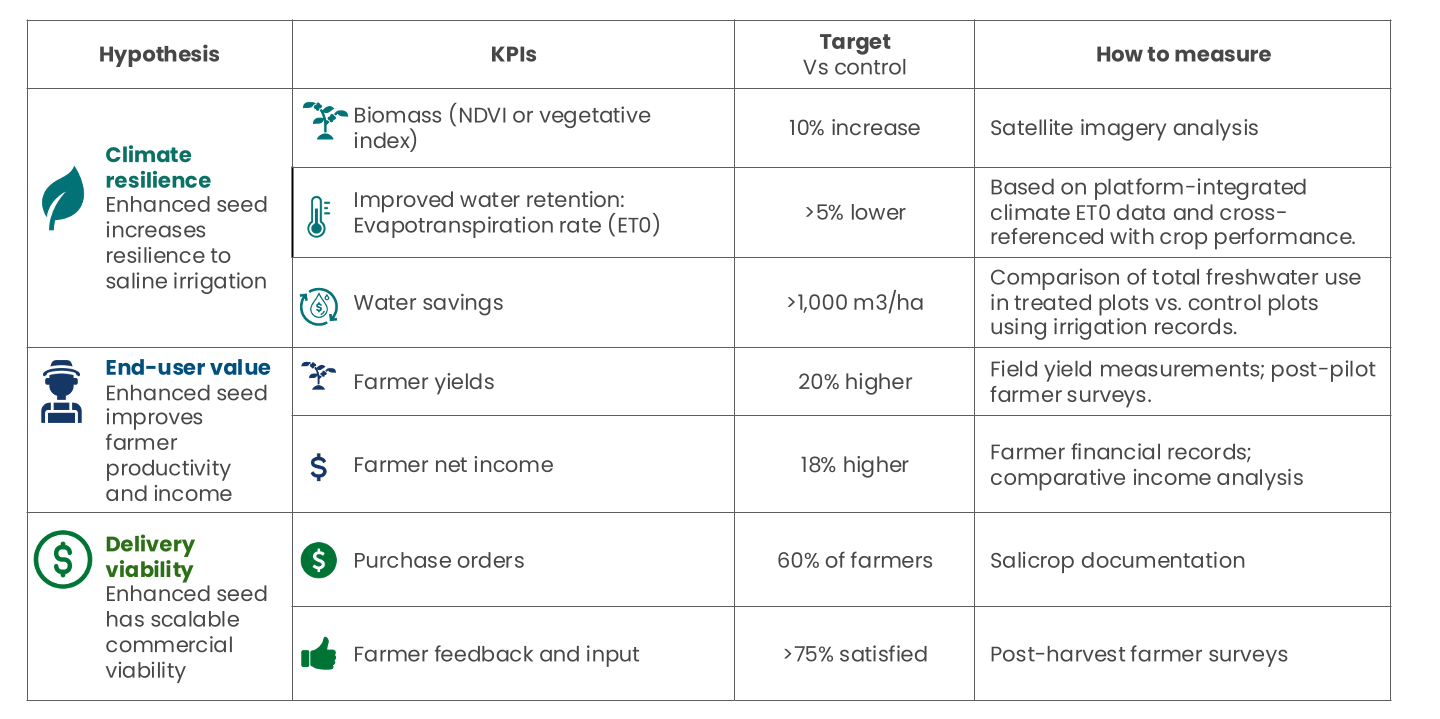
A Partnership for Climate-Resilient Livelihoods
This collaboration is part of Mercy Corps Ventures’ broader effort to back early-stage innovations that help climate-vulnerable communities build more resilient livelihoods. By combining:
Mercy Corps’ long-standing relationships with farmer communities and local institutions, and
Salicrop’s science-driven seed enhancement technology,
We aim to co-create a solution that is both technically robust and grounded in local realities.
“Farmers in Baja California are already adapting to climate change every day,” says Maria Gomez, Climate Venture Lab Lead, Mercy Corps Ventures. “Our role is to bring them tools that respect their knowledge, reduce risk, and open new possibilities for thriving in difficult conditions.”
“Salicrop was founded to help farmers succeed when salinity and heat make agriculture feel impossible,” says Carmit Oron, CEO, Salicrop. “Partnering with Mercy Corps Ventures in Mexico is an important step in showing how seed-level innovation can support smallholders on the climate frontlines.”
Looking Ahead
The Baja California pilot is designed as a first step toward scaling climate-resilient tomato production across Mexico. If the results align with previous trials in other countries—showing higher yields and more stable performance under stress—Mercy Corps Ventures and Salicrop will explore options to:
Expand the program to additional regions and crops in Mexico.
Deepen collaboration with local cooperatives, agribusinesses, and seed distributors.
Integrate with financial and market mechanisms that make it easier for farmers to access improved seeds and other climate-smart solutions.
As climate impacts intensify, farmers need solutions that are practical, affordable, and ready for the field today. Through this partnership in Baja California, Mercy Corps Ventures and Salicrop are working together to ensure that smallholder tomato farmers are not left behind—but instead equipped to grow resilient crops and secure dignified incomes, season after season.