
Pilot Launch | Small Businesses Prepare for Climate Shocks to Protect their Livelihood and Trade with Anticipatory mindset using AI
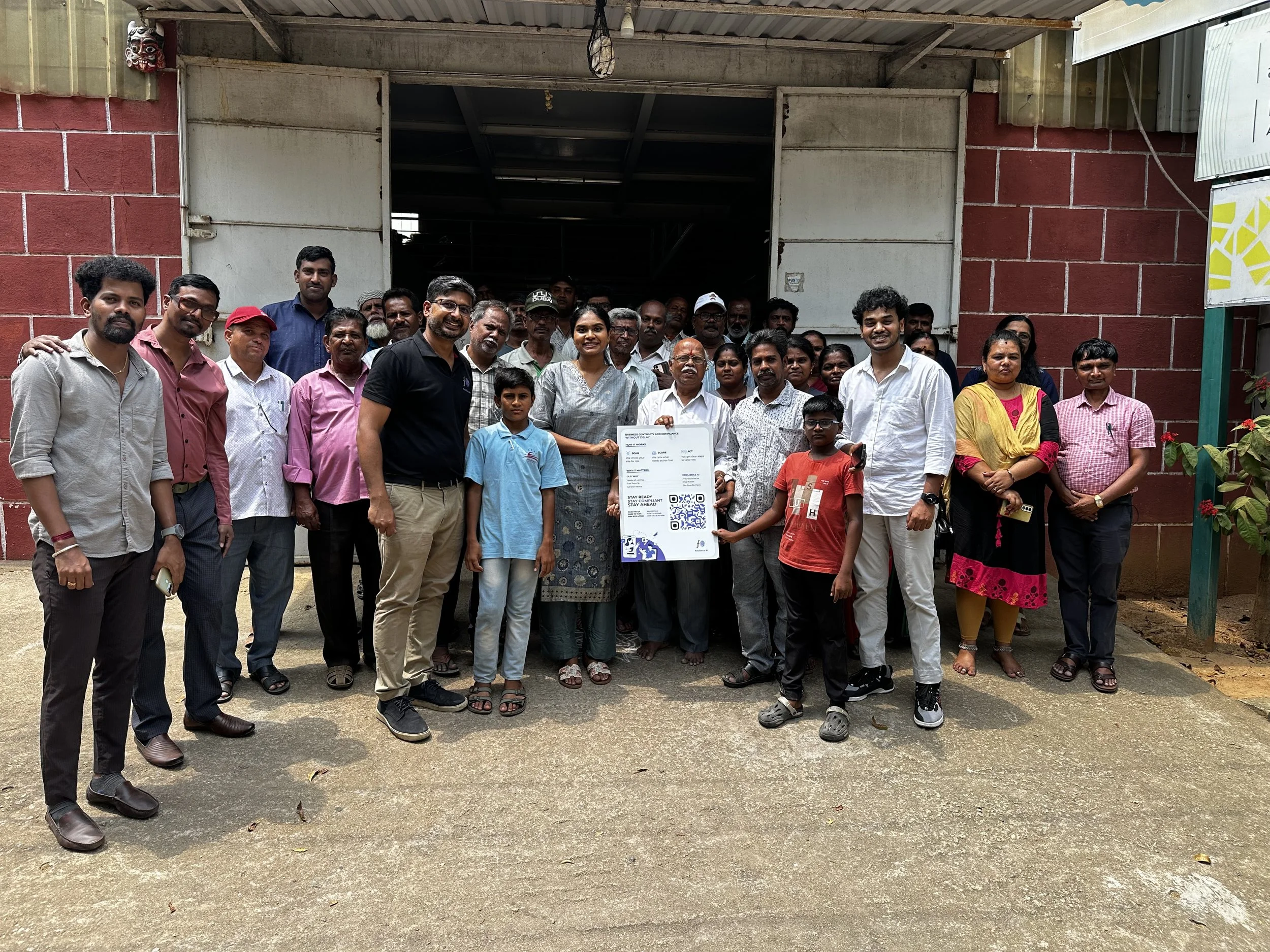
Image courtesy of Resilience AI
By Maria Paula Gomez, Climate Venture Lab Lead at Mercy Corps Ventures and Samhita R, CEO of Resilience AI
Mercy Corps Ventures is partnering with Resilience AI to help small businesses have a better understanding of their risk. The purpose is to test whether AI-driven, building-level climate risk mapping can help small businesses and artisan communities understand their exposure to floods and heat and act and prepare. This pilot is the first time Resilience AI’s technology is being applied specifically to a cluster of small businesses.
In Brief
The problem: Small businesses and artisan communities in emerging markets face growing climate risks, floods, heatwaves, and extreme weather. Communities experience the disruption in different forms, such as children getting sick in a school that isn’t equipped to handle the heat or craftswomen losing their supplies and inventory in waterlogged spaces. At the same time, these communities rarely have a system to visualize and understand potential disruption from climate events. There is a gap for the collective business ecosystem to understand and better prepare for those risks at the level that matters the most: their street, their own building and, their community.
The solution: Resilience AI built Resilience 360, a platform that combines multi-variate scientific parameters with building-level and behavioral ground surveys to produce a risk and vulnerability profile for individual structures across multiple climate hazards. It has been validated across 1.2 million structures and real-time events but never applied specifically to small businesses and artisan clusters.
What we are testing: Working with local partner Craftizen in Channapatna, India, a town of thousands of toy makers and craft artisans, we want to test whether this technology can accurately map climate risk for informal urban clusters, and whether that information leads business owners to better understand their risks and take action to address them.
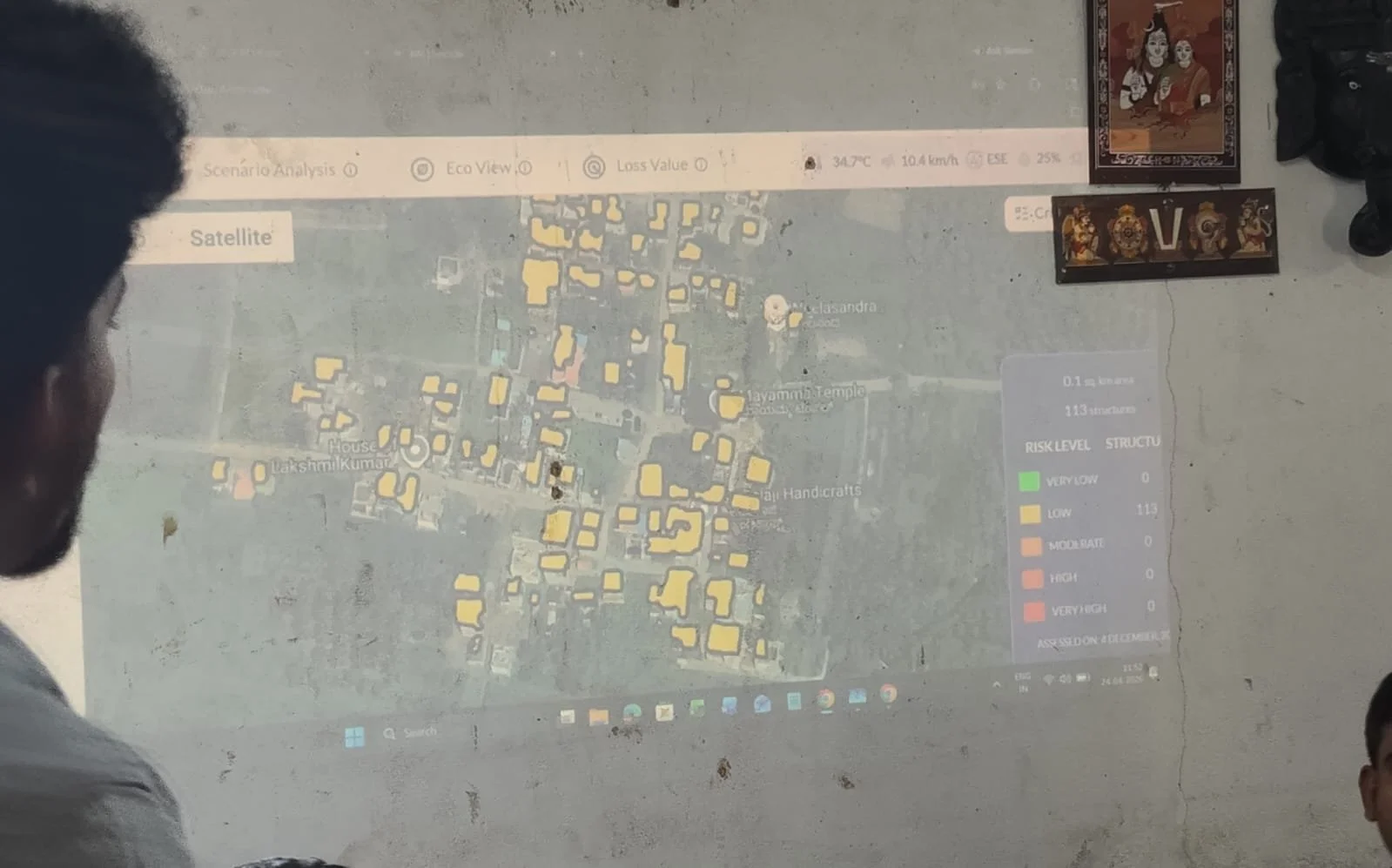
Image courtesy of Resilience AI
The Problem: Climate risk is local, but the data isn’t
For Ramesh, a toy artisan in Channapatna, a flood doesn’t just mean a bad week. It can mean losing an entire inventory, closing the store for weeks, and potentially losing his business. In summer, the problem shifts: temperatures can rise above 35C and being outside becomes dangerous. When it gets hot, customers don’t come and production drops.
This is not unique to Channapatna. Across India, extreme heat and humidity cost the economy an estimated 259 billion labor hours annually between 2001 and 2020. Climate events close roads, damage inventory, and make workplaces dangerous, and most small businesses operate with thin margins and no safety net.
The tools that exist to understand and manage risk were built for large corporations, governments, and infrastructure projects. They are expensive and designed for clients who can commission a custom study. Small businesses were never the intended users. Beyond access, there is a granularity problem: most models operate at a district or city level and miss the specific features of a neighborhood – drainage patterns, building age and materials, construction density – that determine whether a particular workshop floods or overheats. Two businesses on the same block can face very different exposure. A macro-level forecast cannot tell you that.
There is also a deeper challenge. Many artisans and small business lack access to risk data and they don’t yet know that their exposure to climate risk is something that can be measured, monitored, and acted on. They notice that summers feel hotter, that rains come harder, that business gets harder to predict. But the connection between those changes and the specific risks facing their building or their street is not something most have ever been able to make. As one community member put it: “All the people, including me, are not sure what is affecting us. All weather events bring up a challenge in front of us.” This pilot is not just about giving people better data. It is about helping them see their situation in a new way, and then acting on it.
“What we are building goes beyond climate change. We are building to protect people and structures by preparing spaces, businesses, governments with anticipatory mindset to natural disasters, of any kind” Samhita R, CEO and Co-Founder of Resilience AI
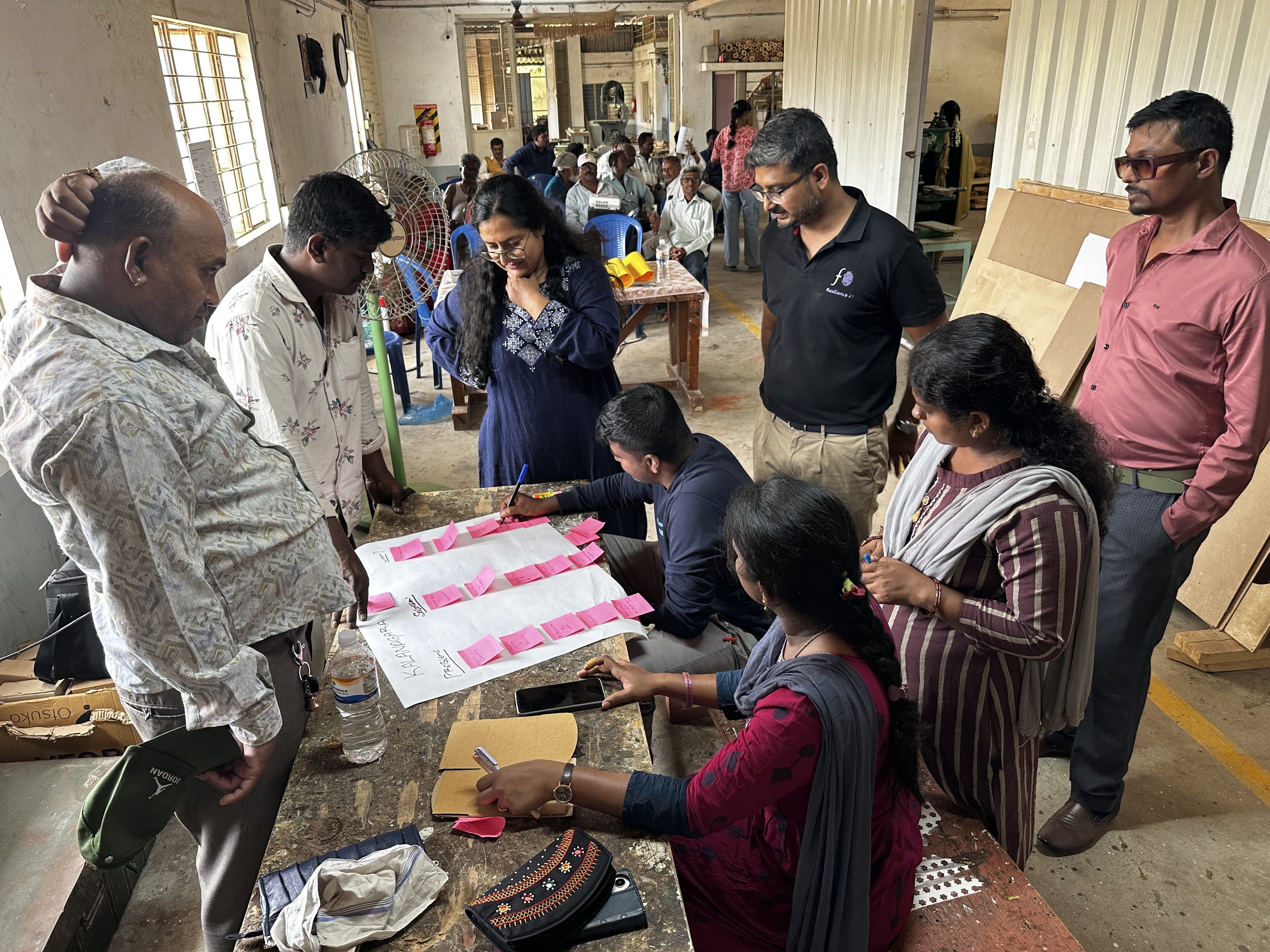
Image courtesy of Resilience AI
The Solution: Making climate risk visible, building by building
“The price of light is less than the cost of darkness” - Arthur C Nielsen
Resilience AI's platform, Resilience360, combines satellite imagery, weather data, and building-level ground surveys. An AI/ML model processes these inputs to produce a hazard and vulnerability score for each individual structure, mapping flood risk, heat stress, and other climate hazards at the building level, faster and at lower cost than traditional assessments.
The platform has been tested across more than 7.5 million structures globally and holds accreditation from India's National Disaster Management Authority. Until now, its primary users have been governments and large infrastructure projects. This pilot is its first application to a small business cluster and the first test of whether communities like Channapatna's artisans can engage with and act on the information it produces.
The Pilot: What We’re Testing
The pilot covers three clusters in Channapatna: the Craft Hub, a dense urban cluster of traditional artisans; Craft Park, an organized production zone hosting around 500 workers; and Neelasandra, a smaller residential craft neighborhood. Resilience AI maps flood and heat risk at the building level across more than 4,800 structures, combining AI model outputs with ground-truthing surveys from residents and artisans.
The second part focuses on what happens after the maps exist. Working with Craftizen, a non-profit supporting artisans and underprivileged women across the crafts value chain, the team runs community workshops and simulation exercises to help participants understand their risk scores and identify actions they can take.
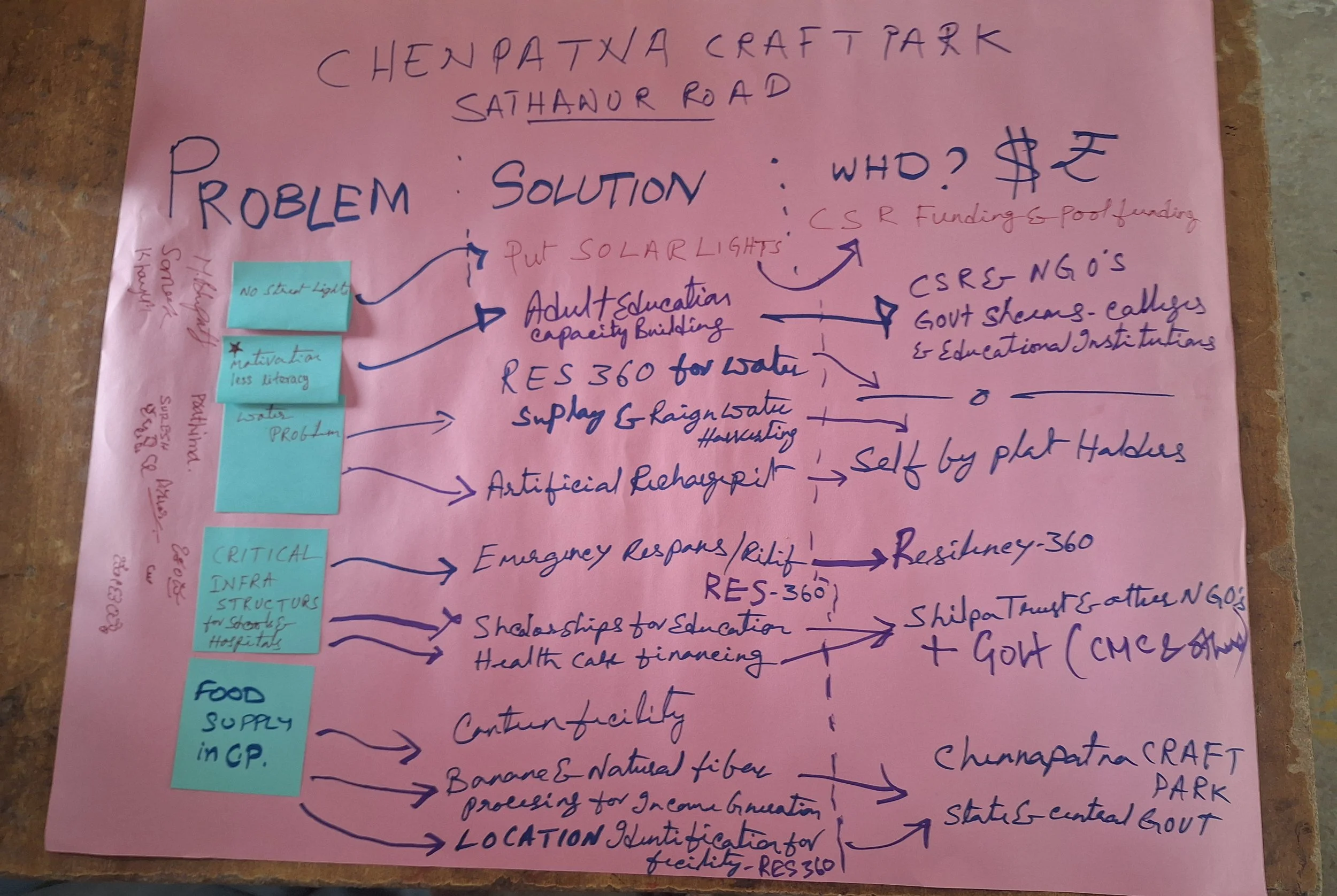
Image courtesy of Resilience AI
We are tracking four questions:
Does the platform produce accurate risk scores for small business and artisan buildings in this context?
Does access to that information improve risk awareness among business owners and artisans?
Does improved awareness lead to concrete anticipatory actions?
Can the tool be adopted and sustained by communities over time?
Learning Agenda
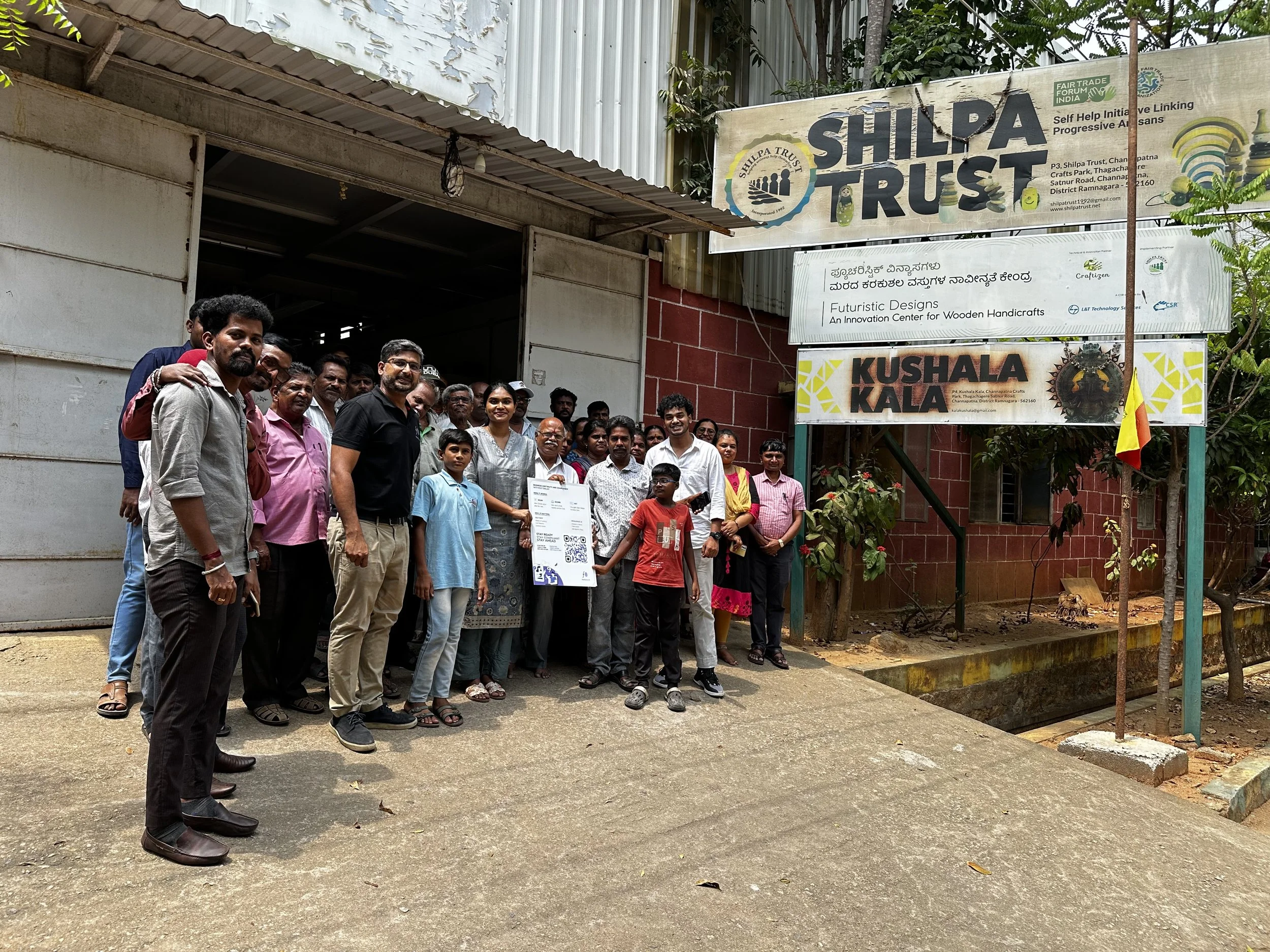
Image courtesy of Resilience AI
Why We Backed this Pilot
This pilot sits at a layer of the climate resilience challenge we have not previously explored in our portfolio. Most of our previous pilots work with smallholder farmers on agricultural adaptation. Resilience AI is different: it targets the built environment and the economic continuity of small businesses — the workshops, factories, and storefronts where livelihoods are made.
Channapatna is one of thousands of small business clusters across India and other emerging markets facing similar exposure. If this pilot shows that the technology works and that communities can act on the information, the pathway to broader adoption, through government programs, disaster management agencies, and MSME support organizations, is clear.