
Pilot Insights | Reducing climate vulnerability through insurance-embedded MSME loans in Kenya
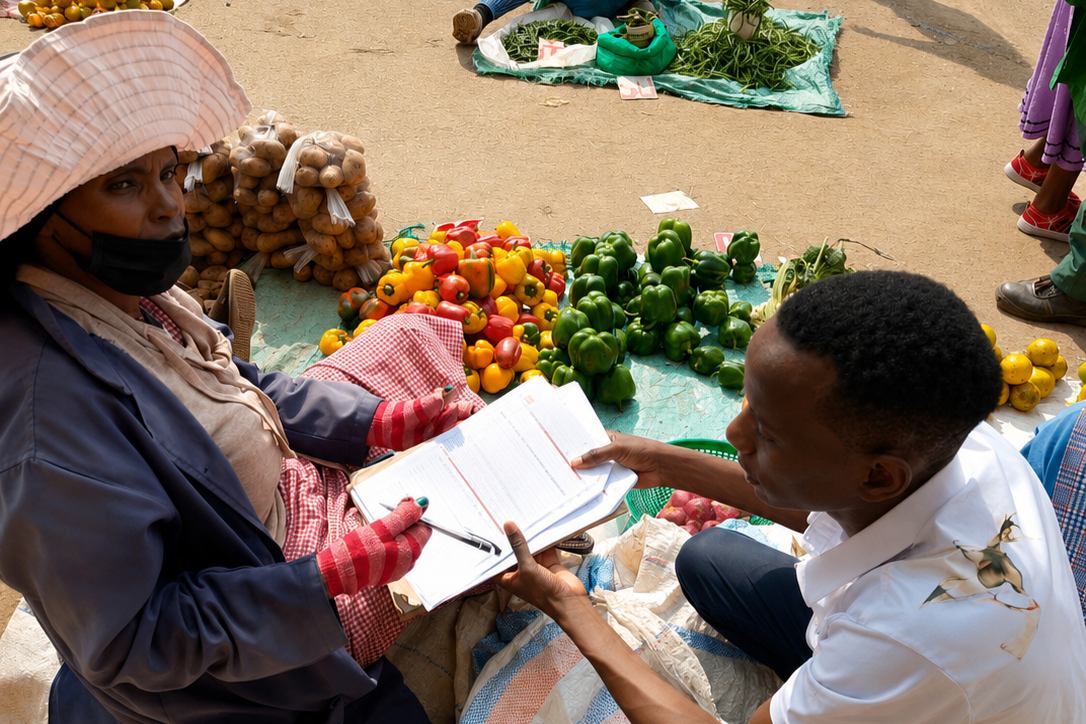
Photo courtesy of Fortune Credit
Mercy Corps Ventures partnered with BlockBima, Fortune Credit, Shamba Network, and RiskShield to test whether rainfall-indexed insurance embedded into short-term working capital loans could protect climate-exposed informal traders while reducing lender risk.
Unlike traditional insurance, the cover was built into the loan: satellite rainfall data triggered smart contracts, payouts went to the lender, and borrowers received automatic loan-balance reductions without filing a claim.
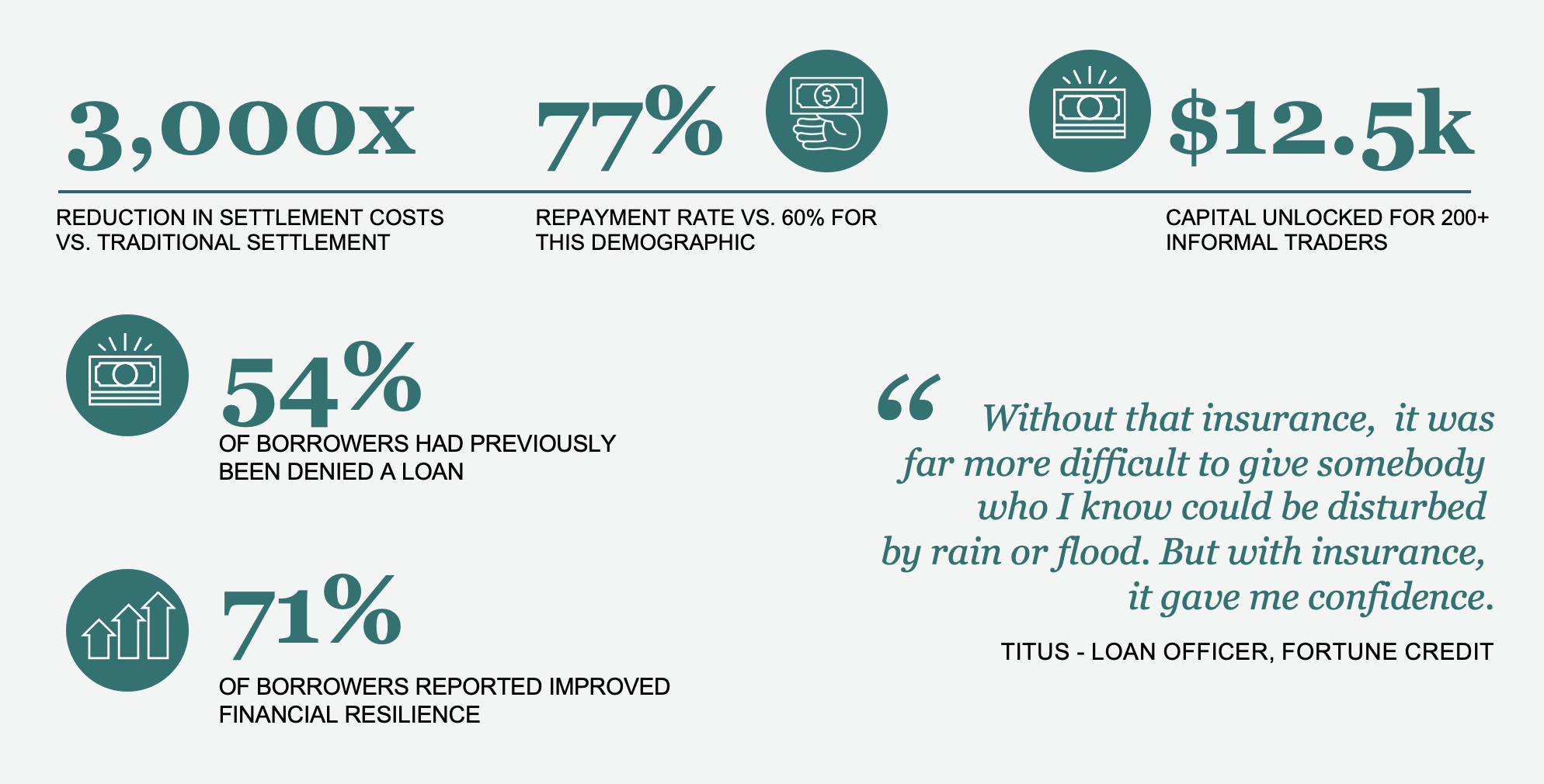
Across two phases, 203 traders received 322 insurance-backed loan policies, unlocking KES 1.61 million (US$12,500) in credit. During the October-December 2025 wet-season phase, heavy rainfall triggered payouts on five days, covering 49 policies and reducing borrowers’ loan balances by KES 88,635 (US$690), with settlement completed in one day.
MSMEs across Sub-Saharan Africa are highly exposed to climate shocks yet remain chronically underinsured. The region’s 44 million+ MSMEs account for up to 80% of jobs, but many lack protection from intensifying extreme weather. Women entrepreneurs are especially vulnerable, operating in climate-exposed sectors while facing barriers to resilience financing and adaptation.
For informal traders, rainfall shocks can quickly become credit shocks. Heavy rains can close stalls, damage inventory, reduce customer traffic, and cut income, making repayment harder when working capital is most needed. In Kenya, digital lender defaults have risen from 15-20% in 2020 to nearly 40% by 2024, while only 17% of SMEs accessed climate-adaptation loans in a 2021 study.
Insights in Brief
The BlockBima pilot improved financial resilience for climate-exposed informal traders by reducing repayment pressure during rainfall shocks. When heavy rainfall triggered the insurance, part of each borrower’s repayment was automatically covered, freeing up cash for recovery. 71% used that cash to restock or improve their businesses, while 86% had implemented or planned adaptation measures such as drainage upgrades, weather-resistant structures, emergency savings, or relocation.
Smart-contract automation materially reduced insurance settlement time and cost. Settlement time fell from a traditional 30-day baseline to one day, a 97% reduction. Claims were 100% automated, and on-chain settlement cost less than 1 U.S cent ($0.006746) for two aggregated payout transactions versus an estimated $US21.70 under a traditional parametric model, representing a 3,000x reduction.
Embedding insurance into loans helped Fortune Credit reach borrowers it had previously considered too risky to serve. The pilot issued 322 insurance-backed loan policies to 203 informal market traders, unlocking KES 1.61M (US$12,500) in working capital credit. All pilot borrowers were new Fortune Credit customers, 76% were women, and 54% had previously been denied a loan.
The pilot showed strong borrower demand for climate protection when insurance was bundled into a familiar credit product. 86% of endline respondents preferred a loan with embedded insurance, and 100% said they would take another loan with embedded climate insurance in the future.
“Our partners, Fortune Credit, were able to lend to these market women — a group that previously would not have qualified because the risk of default was very high.” Kennedy Nganga | CEO, BlockBima
Next Steps
BlockBima plans to scale to 10,000 beneficiaries across market traders, bodabodas, and MSMEs, while expanding beyond rainfall-indexed cover to additional perils and lending partners across East Africa.
This report is the second of a two-part series. The first blog outlined the pilot launch, our learning questions, and the hypotheses we set out to prove. This final report provides an overview of the impact of the solution, and the key insights and learnings from the pilot.

