
Pilot Launch | Digital Cash in Fragile Contexts: Cash Transfers in Stablecoins for Vulnerable Women in Rural Haiti
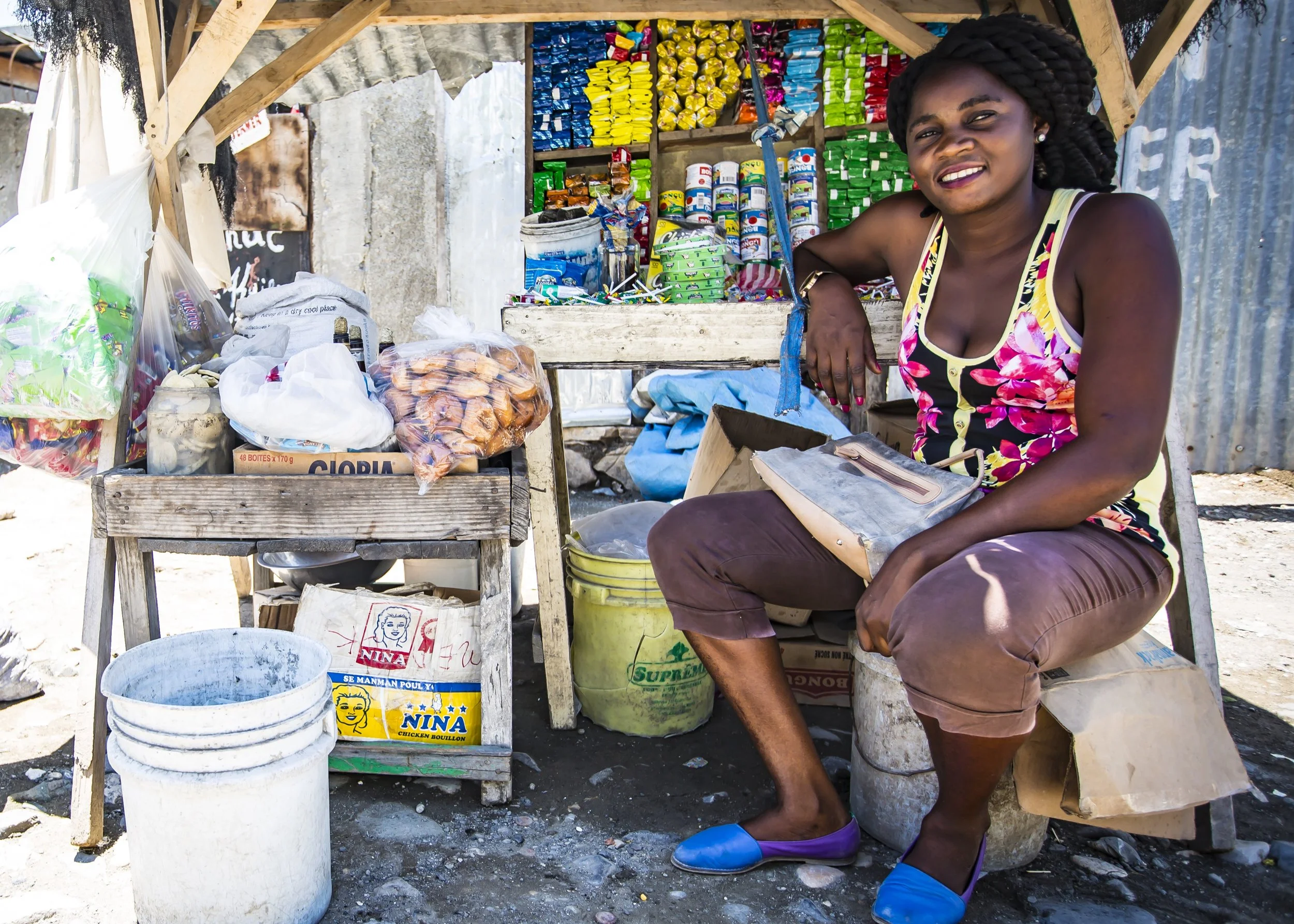
Mercy Corps Ventures, in partnership with Fonkoze Foundation and Paon Bleu, is launching a blockchain-based digital cash pilot in Northwest Haiti—deploying the Bousol stablecoin wallet to 200 of Haiti's most vulnerable rural women as a safer, more efficient, and more transparent alternative to physical cash or mobile money.
This post is the first in a two-part series. The second will share key insights and results once the pilot is completed.
In Brief
The pilot will disburse USD 80,000 in USDC stablecoins to 200 extremely vulnerable rural women enrolled in Fonkoze's Chemen Lavi Miyò (CLM) social promotion program in Northwest Haiti.
Bousol, a digital wallet built on the Stellar network, will enable women to receive, store, and spend digital funds, or convert them to cash through Sèvis Finansye Fonkoze (SFF - a microfinance entity) branches and participating local vendors.
A local vendor network, with accounts at SFF, will allow participants to spend their USDC or offramp to cash
A parallel group of 200 CLM members will continue receiving cash assistance through traditional methods, enabling direct comparison of safety, efficiency, and user-experience outcomes.
If successful, this model could inform how 52 humanitarian organizations delivering over $56 million annually in Haiti structure their cash assistance programs.
The Problem
Haiti's cash delivery crisis
Haiti faces an acute convergence of humanitarian need and infrastructure fragility. Gang violence and civil insecurity have made handling physical cash increasingly dangerous for both field staff and beneficiaries. Fonkoze—Haiti's leading microfinance institution and Fonkoze Foundation the implementer of the CLM social promotion program—faces growing operational challenges in delivering physical cash assistance to rural field locations safely and cost-effectively.
Existing digital payment alternatives offer limited relief. They are widely reported by CLM members to be difficult to use, subject to excessive fees, and linked to growing incidents of agent extortion.
Three intersecting challenges define the problem this pilot seeks to address:
Physical insecurity from cash distribution: In the context of heightened gang violence and insecurity, carrying cash makes both CLM members and field staff targets. Traditional disbursements require Fonkoze (Foundation) staff to travel to program members’ homes with physical money—exposing them to serious risk and a risk of loss of funds.
Exclusion from formal finance: For CLM members in Bombardopolis and surrounding municipalities, the nearest SFF branch is several hours away by motorbike — a journey that is costly, time-consuming, and often impractical. This distance is a structural barrier: without a formal account, there is no savings mechanism, no path to credit, and no access to institutional financial services. Existing digital alternatives have not closed this gap. Fee structures are prohibitive for small transfer amounts, rural connectivity is scarce and unreliable, and many women lack the digital literacy to navigate platforms not designed for them.
Opacity and cost of cash operations: Physical cash delivery involves manual, resource-intensive processes with no real-time auditability. Staff spend significant time on cash logistics that could otherwise support direct member assistance.
Aid systems have not caught up to current conditions
CLM is one of Haiti's most rigorous social promotion programs, designed specifically for ultra-poor rural women. But the program's cash delivery mechanisms have not kept pace with the deteriorating security environment. Each disbursement cycle requires field staff to transport and distribute cash physically—a process that is costly, exposed to risk, and with records that are difficult to audit.
The Bousol wallet offers a potential path forward: a blockchain-based payment system designed explicitly for low-connectivity, low-literacy environments, and a vendor network that makes digital spending more attractive than immediate cash-out.
The Pilot
The pilot will run from April to June 2026 across two municipalities in the mountainous rural areas of Northwest Haiti, starting with trainings for case managers and recipients in late April.
What makes this pilot innovative
1. Blockchain-based stablecoin payment in one of the world's most challenging contexts
Bousol enables fast, low-cost USDC transactions with full blockchain traceability. Each of the 200 CLM participants will receive USDC payments disbursed from Fonkoze’s digital wallet. This design simplifies liquidity management and preserves individual-level accountability because Fonkoze directly accesses funds. Each transfer disbursed is also transparent, traceable, and auditable on-chain.
The use of a USD-backed stablecoin provides currency stability in an environment where the Haitian Gourde has experienced significant and ongoing volatility.
2. Bousol as a last-mile extension of the SFF network
There is no SFF branch in Bombardopolis. Both CLM participants and local vendors will be supported to open SFF accounts and connect them to their Bousol wallets — enabling them to transact, save, and eventually access credit without traveling to the nearest branch. Bousol, in effect, brings the SFF network to the last mile.
Vendors can accept USDC directly, hold digital funds, and offramp through their SFF account. For participants, spending digitally at a local vendor is also their entry point into formal finance — building a savings history and a pathway to credit through an institution they already know and trust.
From stablecoin to last-mile cash: the Bousol transaction flow for CLM members in rural Haiti
3. Satellite WiFi infrastructure to address rural connectivity
Two municipalities in the pilot area will be equipped with satellite connections and WiFi boosters providing reliable connectivity within a 1km radius of each installation. This infrastructure directly addresses the rural connectivity gap—giving participants network access for transactions without relying on mobile data, which is unreliable and costly in the target areas.
4. Group comparison
A parallel group of 200 CLM members will continue receiving cash assistance through traditional methods throughout the pilot period. This design allows direct comparison of safety outcomes, transaction efficiency, user confidence, and operational burden between digital and cash modalities—generating evidence that goes beyond feasibility testing to address whether the technology meaningfully improves outcomes for beneficiaries and implementers.
The Consortium
Fonkoze Foundation
Fonkoze Foundation is a Haitian organization delivering social protection and social promotion programs to extremely poor women, implementing the CLM program since 2007. CLM is designed specifically for ultra-poor rural women, combining asset transfers, skills training, and dedicated case manager support to build sustainable livelihoods. With deep field presence across rural Haiti and established trust relationships with CLM members, Fonkoze provides the operational backbone of this pilot—managing participant onboarding, case manager training, field research, and vendor identification. Sèvis Finansye Fonkoze (SFF), the microfinance entity, extends this role further: by supporting CLM members and local vendors to open SFF accounts linked to their Bousol wallets, the pilot brings formal financial infrastructure to communities with no physical branch access—enabling transactions, savings, and a pathway to credit without requiring the hours-long journey to the nearest branch.
Paon Bleu / Bousol
Paon Bleu designed and operates the Bousol digital wallet. Bousol is specifically designed for fragile, low-connectivity environments, with a user experience tailored for low-literacy and smartphone-naive populations. Paon Bleu leads platform deployment and technical support for this pilot—managing wallet provisioning, liquidity risk, user training delivery, and ongoing customer service.
Stellar Development Foundation
The Stellar Development Foundation (SDF) is a non-profit organization supporting the development and growth of the Stellar network — an open-source, public blockchain designed for fast, low-cost payments. SDF's support positions this pilot within a broader portfolio of efforts to expand access to digital financial infrastructure for underserved populations globally, and to generate evidence on the viability of stablecoin-based aid delivery in fragile contexts.
Mercy Corps Ventures
Mercy Corps Ventures provided the conceptual and design foundation for this pilot, identifying the opportunity to embed blockchain-based payment tools within the CLM program, structuring the partnership and learning agenda, and supporting Fonkoze and Paon Bleu in adapting the Bousol platform to the specific requirements of the Northwest Haiti context. MCV brings a portfolio of blockchain and stablecoin pilots across emerging markets—including Syria, Afghanistan, Colombia, Nepal, and Senegal—to ensure that lessons from this project inform the broader ecosystem of humanitarian digital finance.
Learning Agenda
We will test three core hypotheses during this pilot. The learning agenda is designed to generate evidence not just on whether the technology works, but on whether it meaningfully improves safety, efficiency, and financial inclusion for CLM members—and whether digital fund circulation can be sustained in a fragile, rural context.
Looking Ahead
This pilot brings together two proven systems: a trusted social protection program and a blockchain-based payment platform, to test whether digital cash can work for the people who need it most, in the place where the barriers are highest. The control group design means the evidence generated will be comparative, not merely observational: we will know not just whether Bousol works, but whether it works better.
If the results are positive, the implications extend well beyond the 200 women in this cohort. Haiti's Cash Working Group—comprising 52 humanitarian organizations responsible for over $56 million in annual cash assistance—represents a clear scaling pathway. The Fonkoze CLM program alone serves 3,000 women nationwide. And the lessons from Northwest Haiti, one of the world's most difficult operating environments, will carry weight for humanitarian innovators working in fragile contexts across the Caribbean, Latin America, and beyond.
We look forward to sharing what we learn. Stay tuned for Part 2, where we will present the pilot's results, insights, and implications for the future of digital humanitarian finance in fragile contexts.