
Why We Invested in Logidoo | Building the Trade Corridors That Feed and Connect West Africa

Logidoo is building the trade infrastructure that connects producers, merchants, and markets across West Africa
In West Africa, the distance between smallholder farmer’s harvest and the client Agro-processor is a long list of barriers: broken roads, opaque border crossings, empty return trucks, overall logistics costs that can exceed the cost of producing.
The intra-African trade sits at just 17% of total commerce (vs. 70% in Europe). Lack of logistics is one of the main bottlenecks holding back food security and climate resilience across the Sahel. In some cases, the cost of moving Ag product from production zones to the regional markets, costs more than the production. Lack of logistics is why some products are left rotting in some places whereas some others are hungry. The insecurity of moving trucks in areas subjects to attacks and blockade makes it all worse.
Logidoo sits squarely within our Inclusive & Resilient Supply Chains & Communities within the broader Climate Smart Technology thesis. The company’s platform serves the populations most exposed to climate shocks: smallholder farmers in the Sahel whose harvests rot without reliable logistics, landlocked communities in Mali and Burkina Faso cut off by drought or conflict, and informal merchants for whom affordable, trackable freight makes or breaks an entire business life.
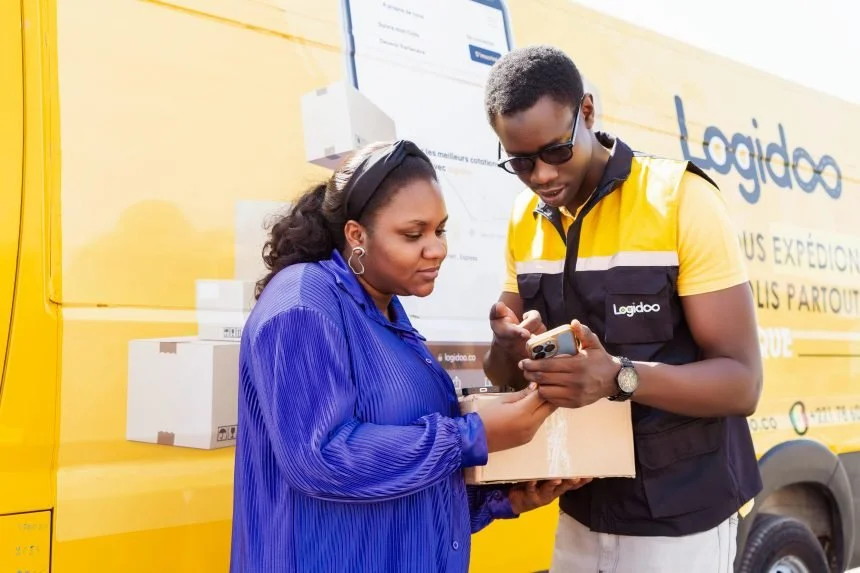
From merchants to small businesses, reliable freight services help reduce the friction that limits regional trade.
THE MARKET NEED
West Africa’s logistics sector has a paradox: the region is rich in agricultural output, mineral resources, and young productive labor, yet locally produced goods can often cost more than imported alternatives. Lack of logistics is part of the problem. Transportation costs in the region remain significantly above global benchmarks, driven by poor road infrastructure, complex and inconsistent customs procedures, fragmented payments, and structural overreliance on informal networks. The result: smallholder farmers watch perishables spoil for lack of affordable freight. Communities in landlocked countries (such as Mali, Burkina Faso, Niger) depend entirely on functioning corridors to access food, medicine, and essential goods.
Consider a mango cooperative in Casamance. They harvest in a tight seasonal window, but the cost of getting their fruit to Dakar, let alone Casablanca or Abidjan, can eliminate any margin. Without a reliable, affordable logistics partner willing to fill returning trucks with their produce; they either sell locally at distressed prices or lose the harvest entirely. Climate variability makes this worse: as rains become less predictable and the Sahara expands.
The geopolitical context adds further urgency. As the countries of the Alliance of Sahel States deepen ties with their Atlantic neighbors and distance themselves from former colonial trade dependencies, intra-regional exchanges are poised for exponential growth. Senegal’s emergence as an energy and agro-processing hub, Ivory Coast’s deepening role as a regional gateway, and the formalization of the African Continental Free Trade Area (AfCFTA) all point to the same conclusion: the corridors that connect these nations will determine who benefits from Africa’s next chapter of growth. The West Africa logistics market reached $45.7 billion in 2024 and is projected to reach $71.5 billion by 2033.
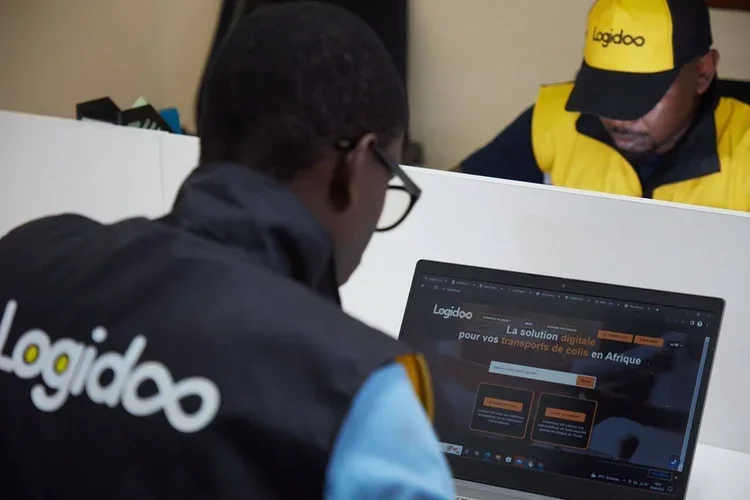
Logidoo's platform helps businesses plan, manage, and track shipments across key trade corridors in West Africa.
THE LOGIDOO SOLUTION
Logidoo is a tech-enabled 5PL (Fifth-Party Logistics) platform purpose-built for Francophone West Africa’s trade corridors. Founded in 2019 by Tamsir Ousmane Traore, a second-time founder, who literally grew up in a family logistics firm and went on to build and exit his first courier company.:
Logidoo takes a fundamentally different approach to the continent’s logistics challenge than the generation of startups that preceded it.
Logidoo builds corridors one by one: studying undiscovered demand, deploying free trade simulation tools that let merchants model costs, timelines, and customs requirements before booking, and then filling both outbound and return legs to make the unit economics work for everyone. A Casablanca–Dakar corridor that moved goods one way will optimize it margins after Logidoo began filling returning trucks with agricultural commodities. This return-trip monetization model can be one of the most critical financial engine of the business.
The platform now spans eight active corridors across Senegal, Morocco, Ivory Coast, Mali, Mauritania, Guinea, Gambia, and Tunisia. Logidoo’s product suite covers the full logistics value chain:
Logidoo Core: Freight marketplace for cross-border shipments
Afridoo: Fulfillment and merchant ERP integration
TexMiles: Last-mile delivery network in Senegal
Kamtar: Heavy freight and trucking aggregator in Ivory Coast (acquired from Saviu Ventures’ incubation portfolio)
Doomarket: Cross-border marketplace connecting African producers to regional and diaspora buyers
The impact case is concrete. Logidoo has helped reduce post-harvest spoilage among cooperatives in Kaolack and Casamance, contributing to a significant income increase for participating farmers. In conflict-affected corridors, Logidoo’s routes have served as the last functional link for delivering food and medicine to communities in Mali and Niger. The platform’s cold-chain-enabled vans and warehouses ensure perishable goods survive heat waves and delays that would otherwise make them unsellable.
Agriculture and food products represent a growing share of Logidoo’s freight flows. The company’s strategic use of agricultural return cargo, creating a virtuous cycle: cheaper freight for everyone, more income for farmers, and more resilient supply chains for communities that depend on them.
Our investment complements MCV’s existing exposure in agriculture and food systems. Portfolio companies such as Tolbi can aggregate thousands of smallholder farmers and scale production — but the logistics cost of getting that production to market can exceed the production cost itself without a partner like Logidoo. This investment makes both sides of our portfolio more valuable.
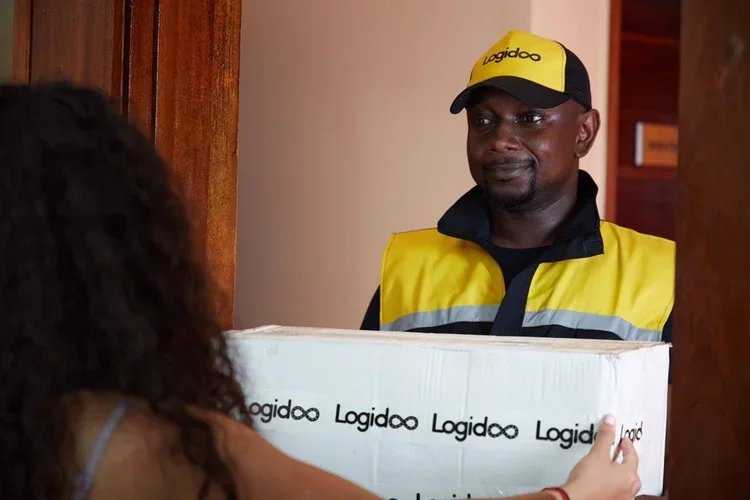
Reliable delivery services are a critical part of resilient supply chains across emerging markets.
Logistics corridors are the base layer connecting communities’ production to markets and maintaining that livelihood link even after climate shock. Logidoo is building that infrastructure corridor by corridor and doing it with the rare combination of deep local knowledge and technological precision. — Rofem Egbe, Investment Associate at Mercy Corps Ventures
At Logidoo, we believe that logistics is more than moving goods from one point to another; it is about connecting farmers to markets, businesses to opportunities, and communities to economic growth. Our mission is to build the trade corridors that will unlock Africa’s full potential by making cross-border commerce simpler, more accessible, and more efficient for everyone. — Tamsir Ousmane Traore, Founder & CEO, Logidoo
We are proud to back Logidoo alongside a syndicate of regionally experienced investors who share our conviction that the infrastructure enabling trade, food security, and climate adaptation in West Africa is yet to be built.
Stay tuned for more updates on our portfolio here.